
Wellington · Somerset · Mid Devon
Patios & Pavingin Wellington, Somerset:built to sit level for decades
A patio you can put a table on without a wobble, drain a downpour off in minutes and still be proud of in ten years, priced element by element after a free site visit, usually back with you inside a week.
Guide price £130–£180 per m²
Free site visit · Itemised written quote usually within a week · Written contract on every job
6 years
Landscaping experience, backed by 30+ years in carpentry, joinery and building
4-strong
Family team on site, the people who quoted the job do the work
9
Five-star reviews from homeowners across Somerset and Mid Devon
Free
Site visit and itemised written quote, usually back within a week
In writing
Written contract signed by both parties on every job
Service Overview
What patio and paving work actually involves
Paving is the part of the garden you use most and forgive least. It carries furniture, foot traffic, barbecues, wheelie bins and rainfall, and every one of those jobs depends on what is underneath the slabs rather than the slabs themselves. A patio is a shallow structure: an excavated and compacted sub-base, a full mortar bed, laid falls that carry water away from the house, and edge restraint that stops the whole thing creeping outwards over a few winters.
Patios and paving are our specialism and the largest share of the work we do across Wellington, Taunton, Tiverton and the surrounding villages. That covers porcelain, natural sandstone and limestone, riven and sawn slabs, block paving, setts, and mixed schemes where paving meets steps, sleeper beds or a new lawn.
The work starts by digging out to a depth that suits the finished level and the ground we find, not a standard figure copied from the last job. Somerset ground varies enormously between a clay-heavy plot in Wellington and free-draining land further up towards the Blackdowns, and the dig depth, sub-base thickness and drainage plan change accordingly.
Every slab is laid on a full wet bed rather than dabs of mortar, jointed with the correct product for the material, and finished with cut edges that meet walls and thresholds cleanly. Where a patio abuts the house, the finished surface stays clear of the damp proof course and falls away from the building.
Who it is for
Homeowners replacing a cracked, sunken or slippery patio, or creating a proper seating and dining area where there is currently lawn, gravel or worn concrete.
When it is needed
When slabs rock underfoot, water pools after rain, moss has taken over the joints, levels have dropped away from the back door, or a garden redesign needs a hard surface to build around.
Why a professional build matters
Falls, sub-base compaction and edge restraint are invisible once the job is finished, and they are exactly what fails first. Getting them wrong means relaying the whole area, not patching it.
What we do not do
We do not lay resin surfacing and we do not take on commercial contracts at present. Almost all our work is private residential projects, which is where the detail counts most.
Request your free quote
Free site visit, itemised written quote, typically back with you inside a week.
Prefer to talk it through? Call 07340 000463 between 8am and 8pm, Monday to Saturday.
What Happens If It Waits
What happens when paving is left or laid badly
A failing patio rarely fails politely. Rocking slabs become trip hazards, particularly for older visitors and anyone carrying a tray of food out to the table. Once a slab moves, the joint around it opens, water gets underneath, frost lifts it further, and the movement spreads to the slabs beside it. What was one loose flag in autumn is often a corner of the patio by spring.
Standing water is the more expensive problem. If a patio drains back towards the house, or is laid too high against the wall, rainwater sits where it should never sit and finds its way into brickwork. Damp patches on internal walls at skirting level are frequently a paving problem rather than a plumbing one, and the repair bill is far higher than the paving would have been.
Then there is the slow cost of not using the space at all. A patio that is green with algae from October to April, or too uneven to put a chair on, quietly removes a room from the house. People stop going outside, the furniture stays in the shed, and the garden becomes something you look at through a window rather than use.
Common mistakes we are called in to fix
Laying on sand or spot bedding
Five dabs of mortar under each slab leaves voids. Voids fill with water, water freezes, and the slab cracks or rocks. A full bed costs more in material and pays for itself the first winter.
Skimping on the dig
Laying over topsoil or a thin scraping of hardcore guarantees settlement. Organic material under paving rots and compresses, and the surface follows it down.
No fall, or the wrong fall
A level-looking patio holds water. Paving needs a deliberate slope away from the building, set with a level and checked as the work goes, not judged by eye.
Choosing the slab before the site
Some porcelain and smooth-sawn stone becomes very slick in shade. Material choice should follow how much sun the area gets, how much traffic it takes and how close it sits to trees.
Our Process
How a Harbour Grove patio gets built
- 1
Free site visit and measure-up
We come to you, measure the area, check levels against the house, look at access for machinery and materials, and talk through what you want the space to do.
- 2
Itemised written quote
Every element is priced separately - excavation, muck away, sub-base, bedding, slabs, jointing, edging, steps - so you can see the cost of each part and adjust the scope. Quotes are usually with you within a week.
- 3
Written contract and agreed start date
Both parties sign a contract setting out scope, price and timings. A 50% deposit is taken by bank transfer, with the balance due on completion.
- 4
Excavation and base build
We dig out to the depth the site needs, remove the spoil, then lay and compact the sub-base in layers, setting the levels and falls before a single slab is placed.
- 5
Laying, jointing and handover
Slabs go down on a full mortar bed, cuts are made to fit walls and thresholds, joints are filled with the right product, and the site is washed down and swept clean before we hand it back to you.
The Benefits
What you get from a properly built patio
Longevity
A compacted base, full bedding and edge restraint mean the surface stays where it was laid. No annual relaying of the corner that always sinks.
Drainage that works
Falls are set to carry water away from the house and off the surface, so the patio dries quickly after rain instead of holding puddles.
Safety underfoot
Level, non-rocking slabs and a material chosen for the light and traffic the area gets: no wobble, no unexpected step, less algae build-up.
Cost control
Element-by-element pricing means you know what the slabs cost against the groundwork, and can swap materials or trim the area before anything is ordered.
Speed on site
With up to four skilled people on the job, a typical domestic patio is a matter of days on site rather than weeks of a garden left open.
A clean finish
Cuts are made properly, edges meet walls tightly, and the site is cleaned down daily. Several of our reviews mention you would never know we had been there.
In Detail
Materials, methods and variations
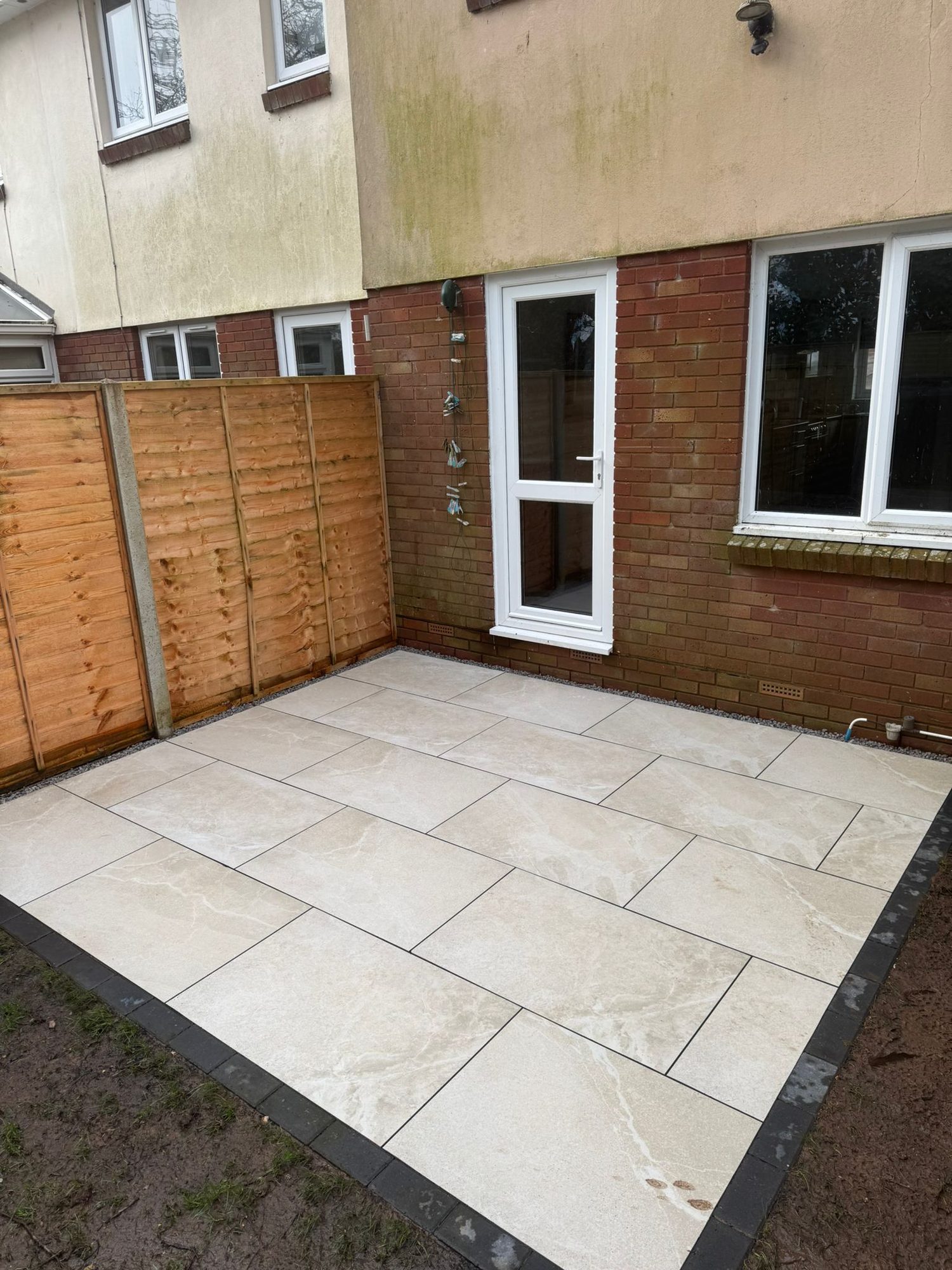
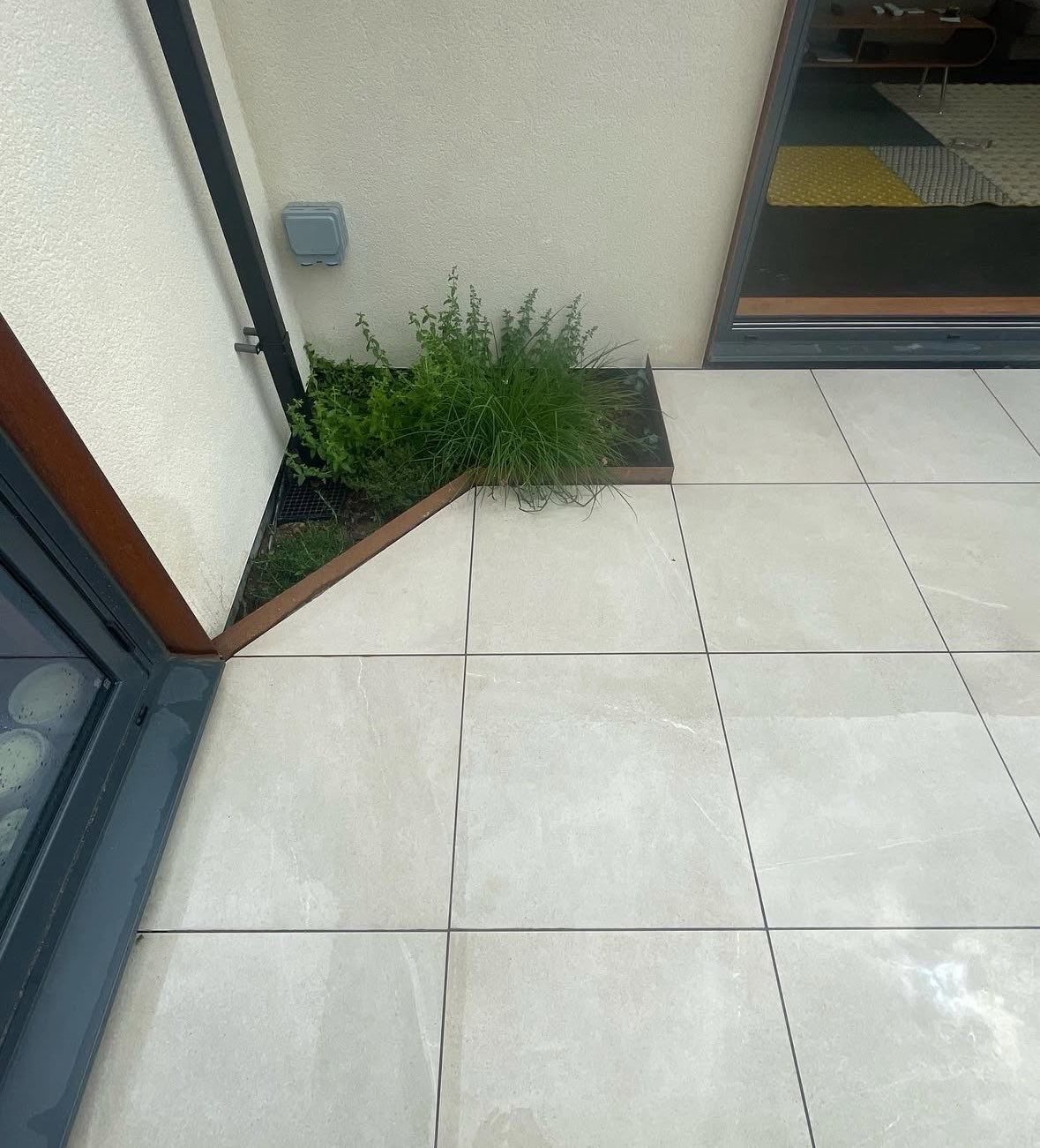
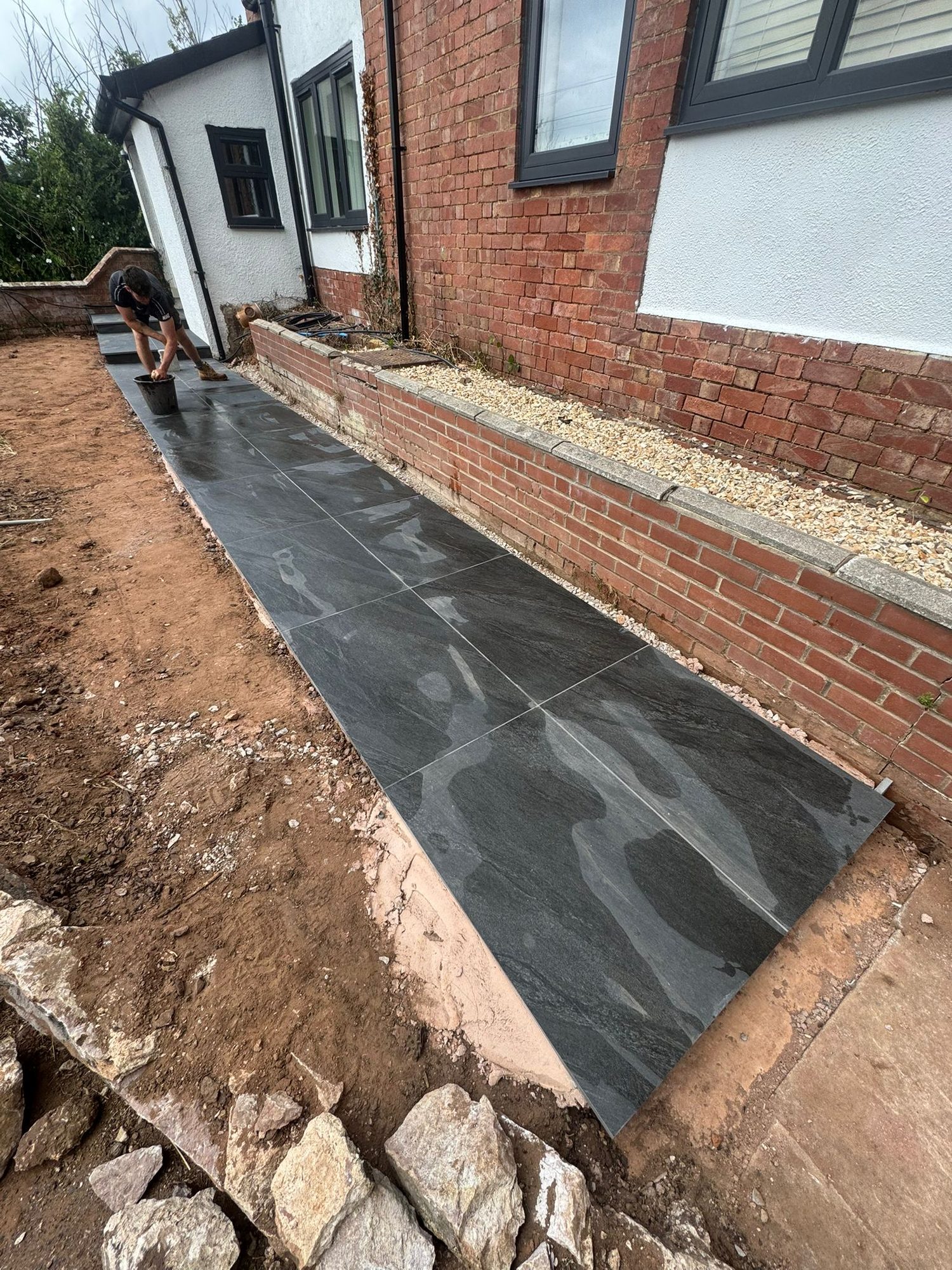
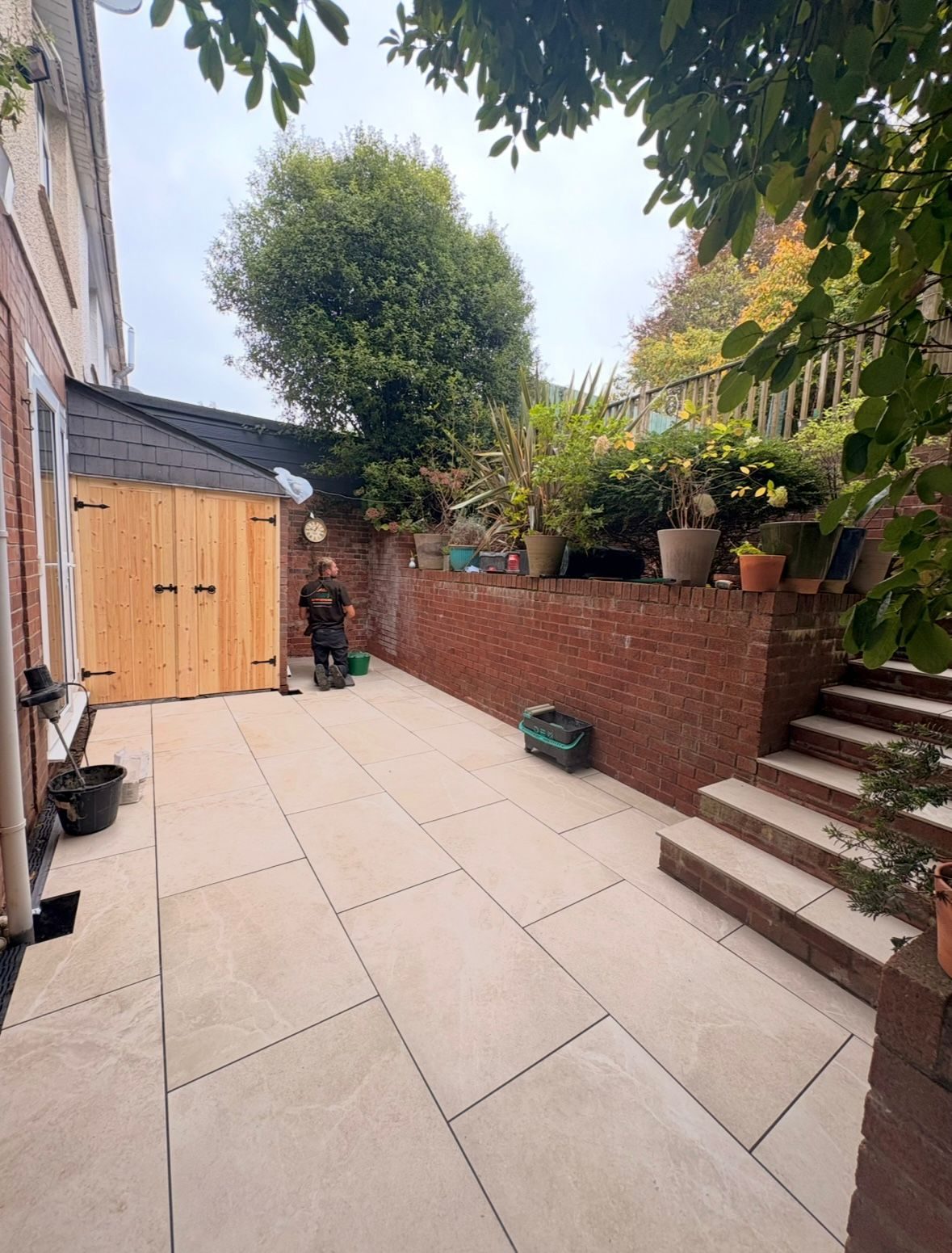
Porcelain has become the most requested material for new patios. It is dimensionally consistent, does not need sealing, resists algae and cleans easily, but it demands accuracy: a slurry primer on the back of every slab, tight consistent joints, and diamond cutting. Natural sandstone and limestone are more forgiving on cuts and warmer in tone, riven surfaces grip better in shade, and both suit older Somerset properties where a sawn porcelain edge can look out of place.
Block paving and setts come into their own where a surface needs to curve, where levels change, or where a patio has to run into a driveway. Blocks are laid on a screeded bed with a compacted sub-base, restrained on every open edge with a haunched kerb or edging course, and vibrated in before jointing sand is brushed and re-brushed to fill fully.
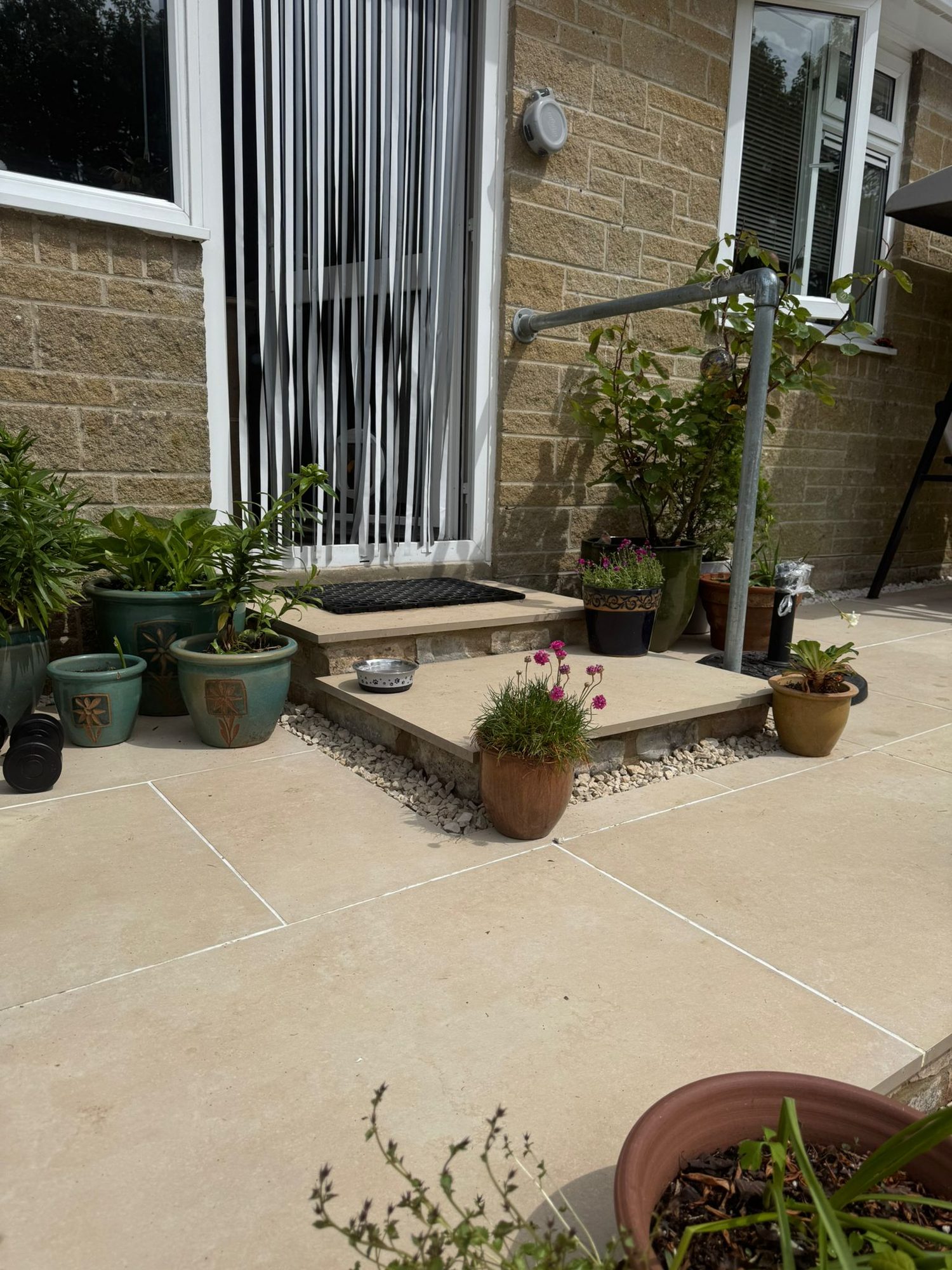
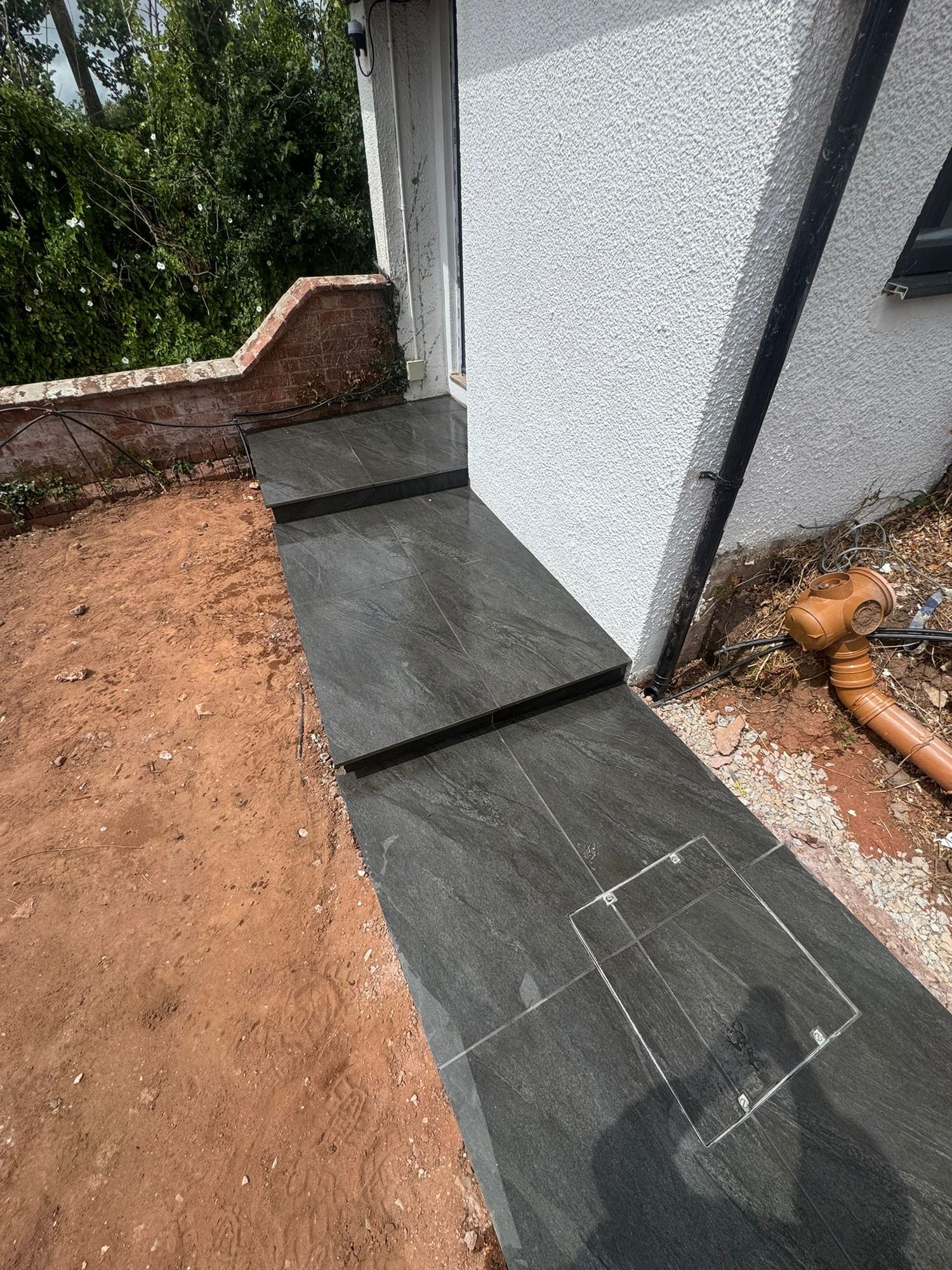
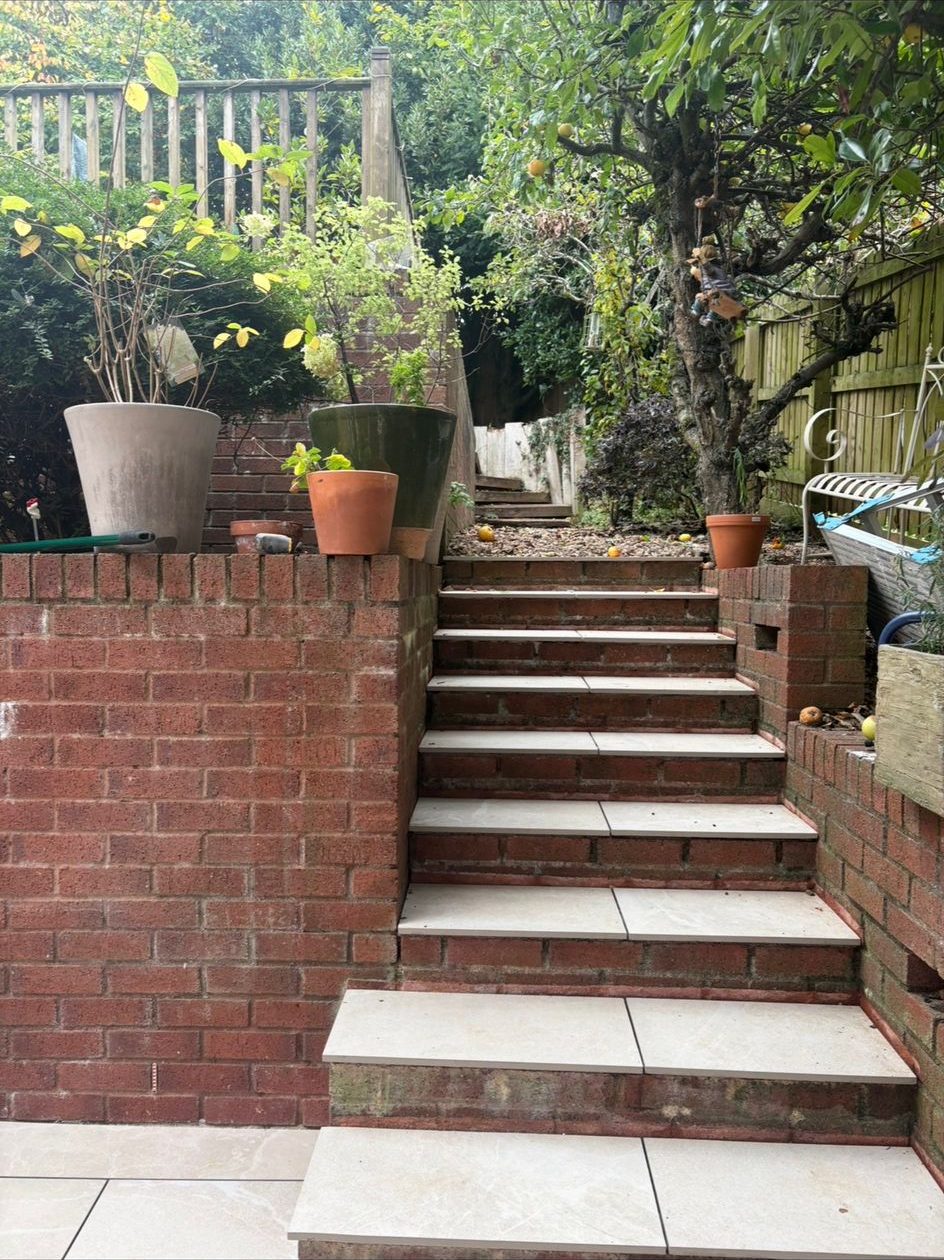
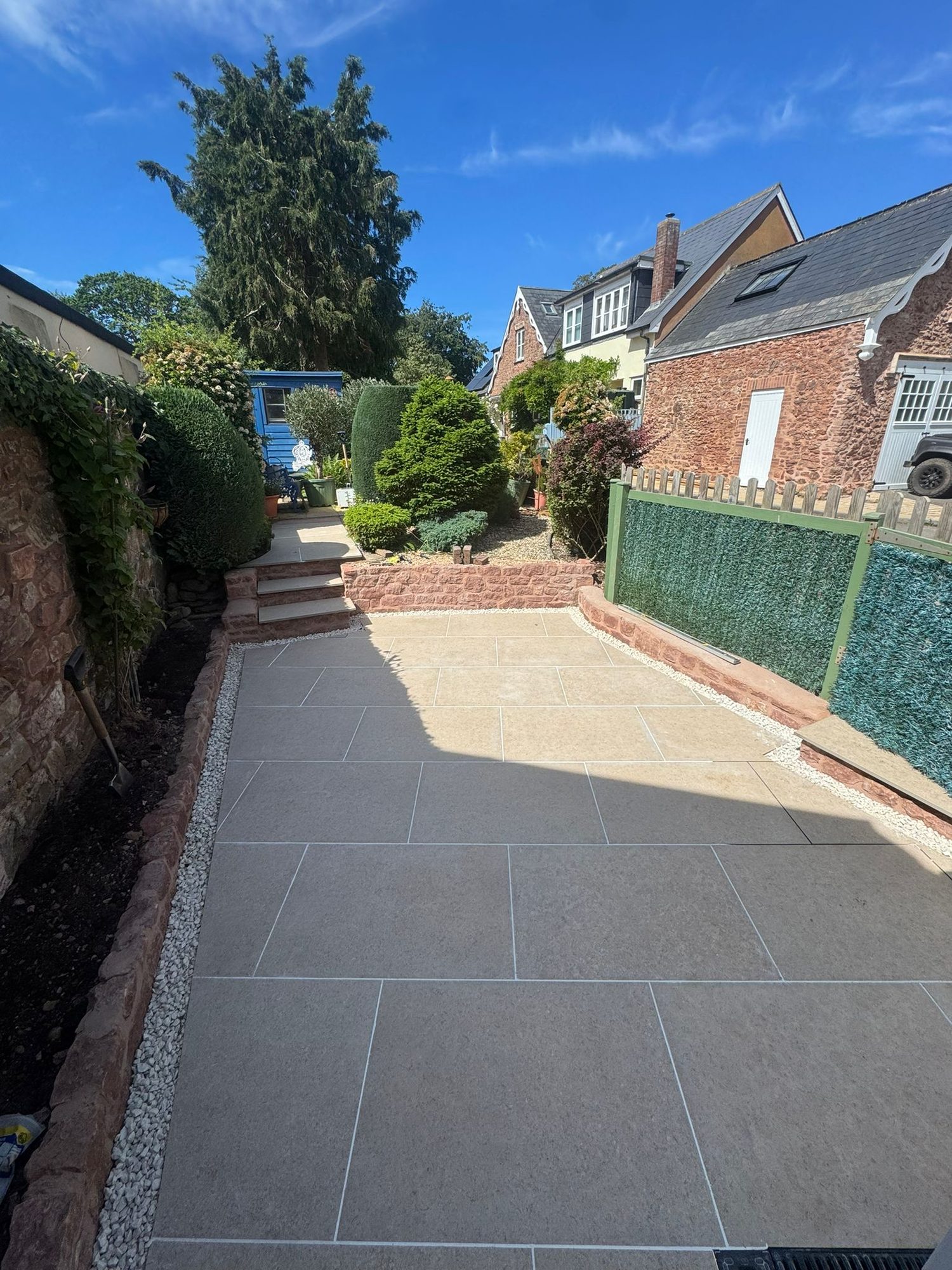
Most patios are not just a rectangle of slabs. Steps between levels, a low retaining or seat wall, a sleeper bed along a boundary, a gravel margin under a fence line, or a run of paving that has to meet an existing manhole cover all form part of the same job. Because the same team does the groundwork, joinery and stonework detail, those transitions are planned in at quoting stage rather than improvised on site.
Porcelain patios
Sawn, calibrated slabs, primed and full-bed laid with narrow uniform joints. Best for contemporary schemes and low-maintenance surfaces.
Natural stone paving
Sandstone and limestone in riven or sawn finishes, single sizes or patterned packs, suited to cottage gardens and period properties.
Block paving and setts
Ideal for curves, level changes and areas taking vehicle or heavy foot traffic, with edge courses to hold the field in place.
Steps, edges and paths
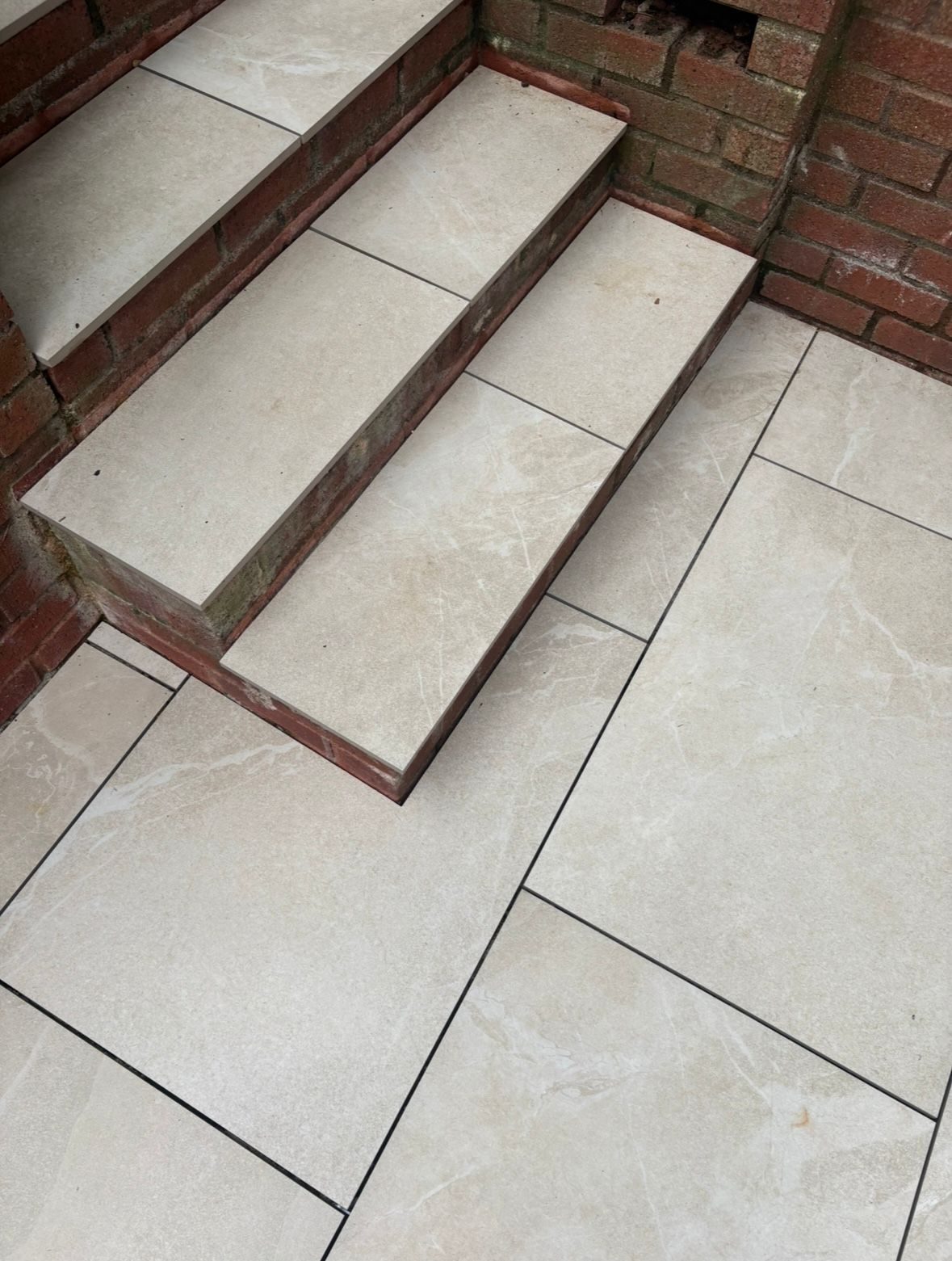
Linking a patio to lawn, driveway or a raised area with steps, paths and access ramps built to the same base standard as the main surface.
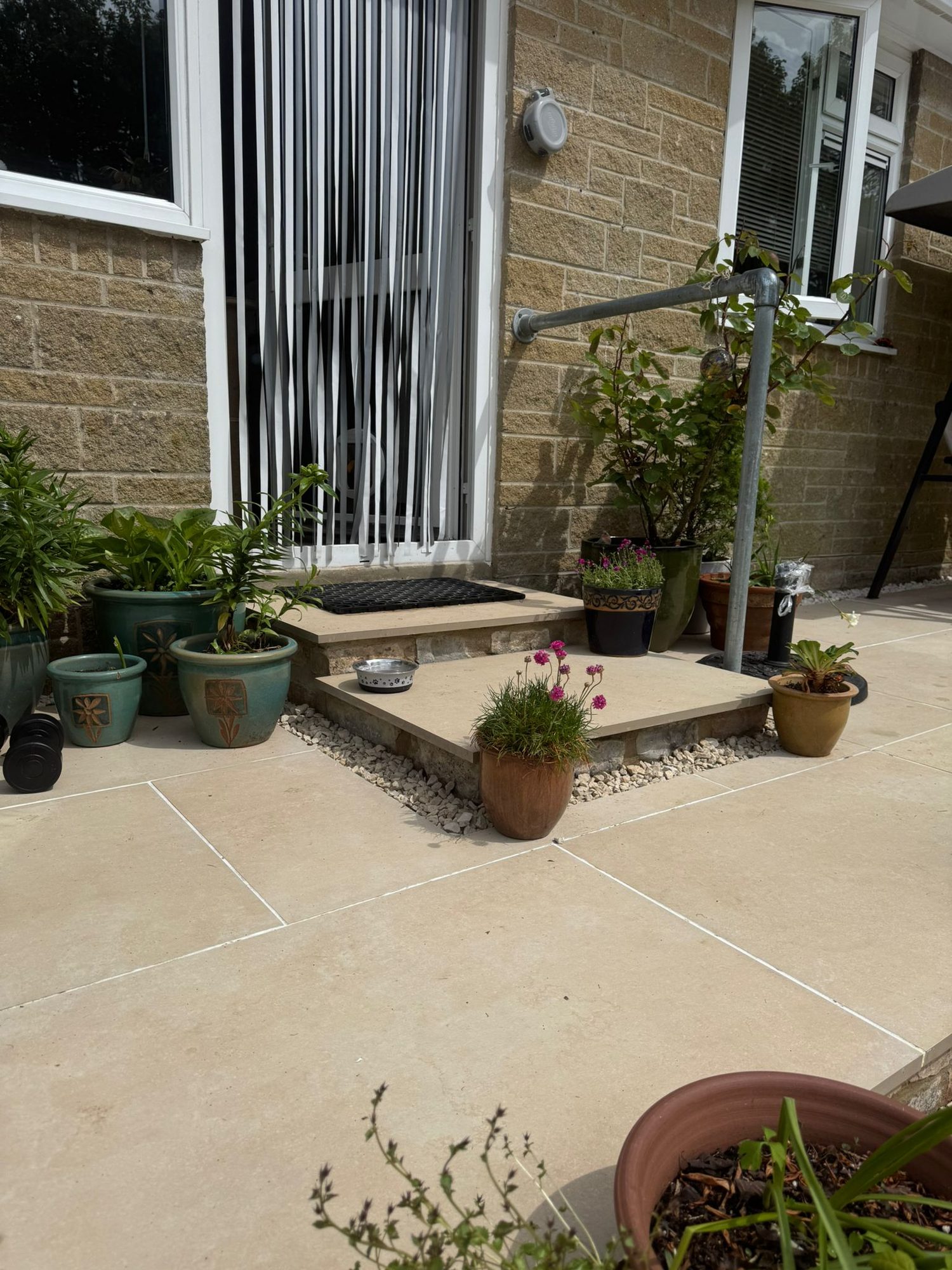
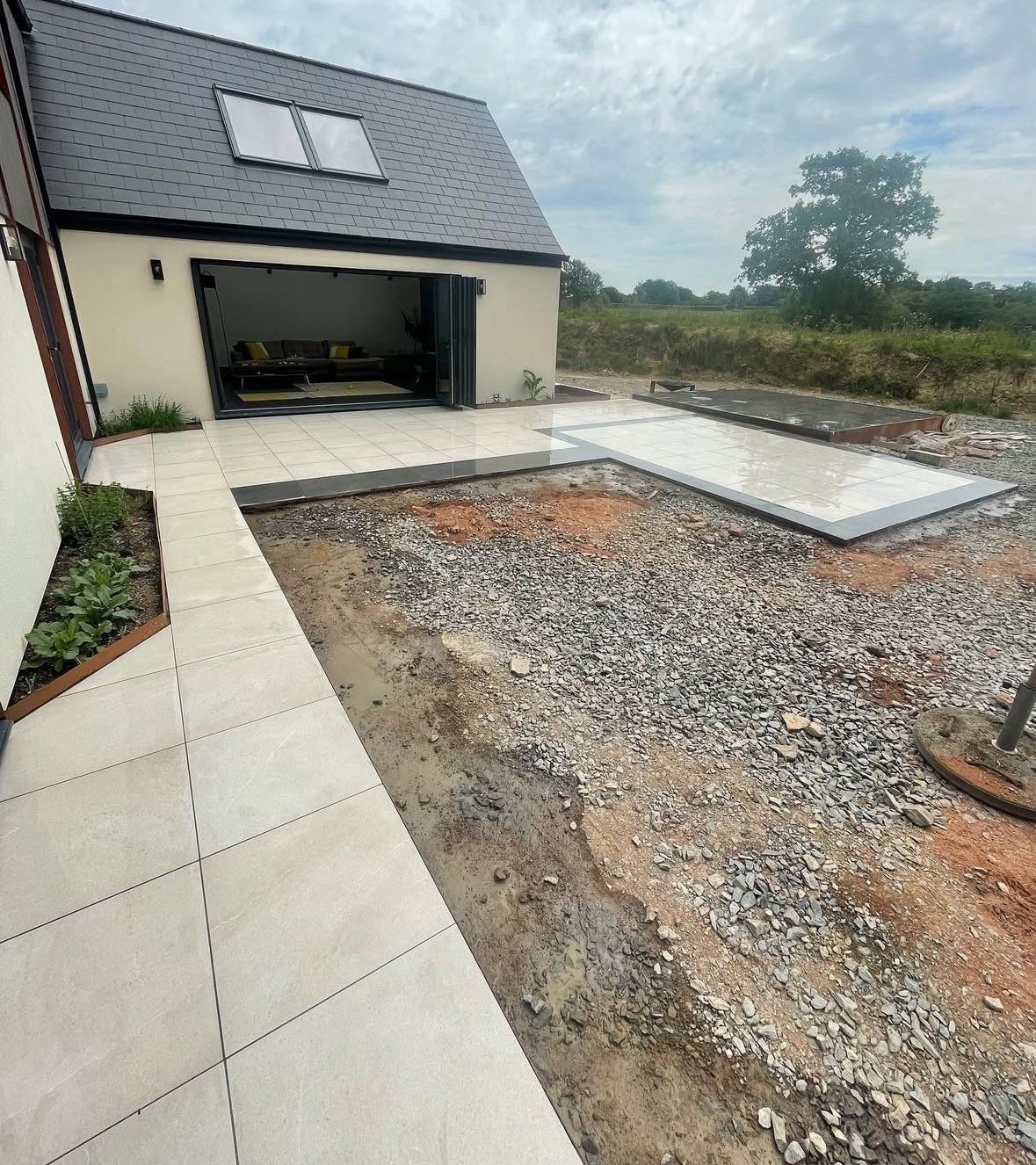
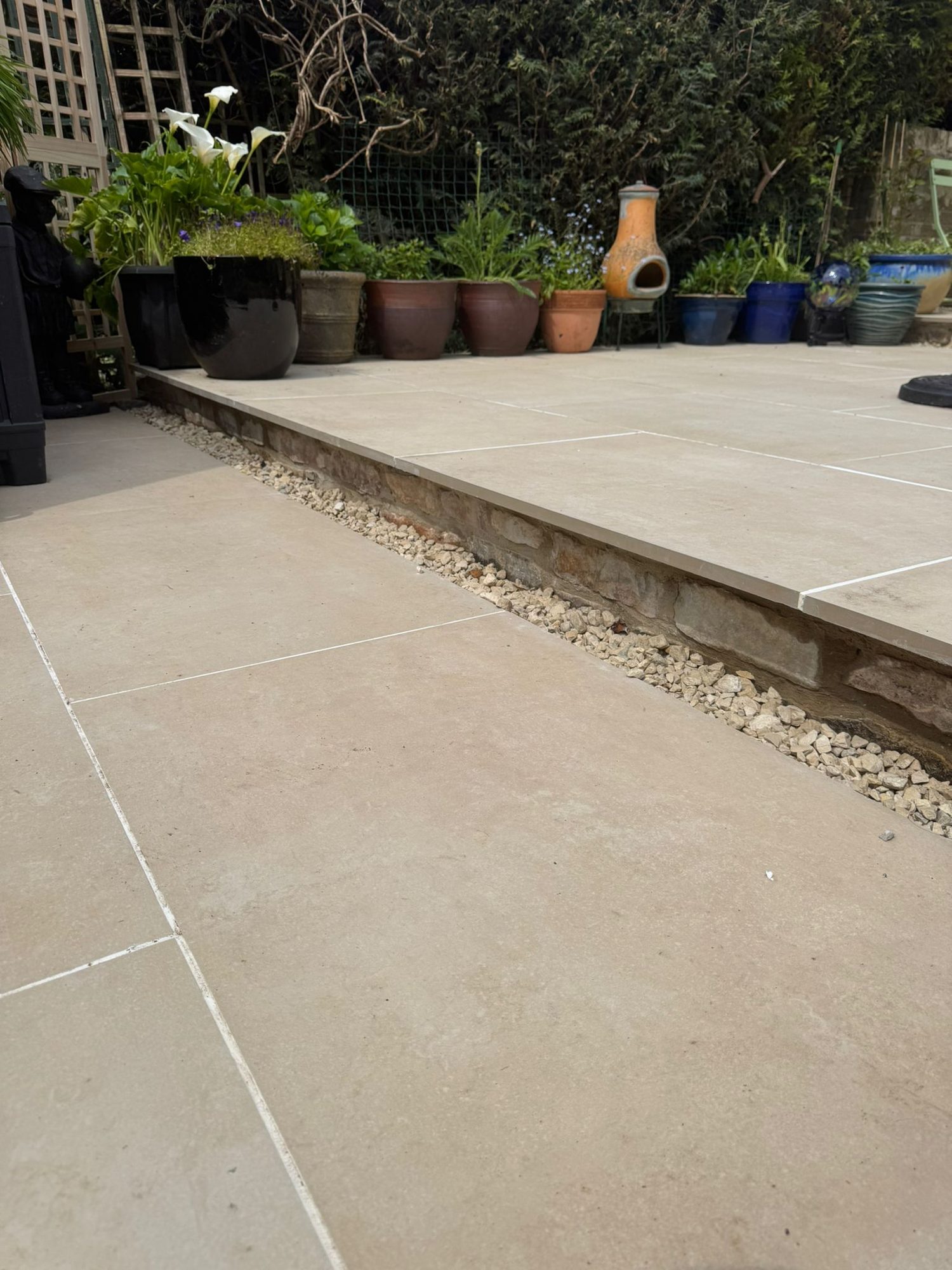
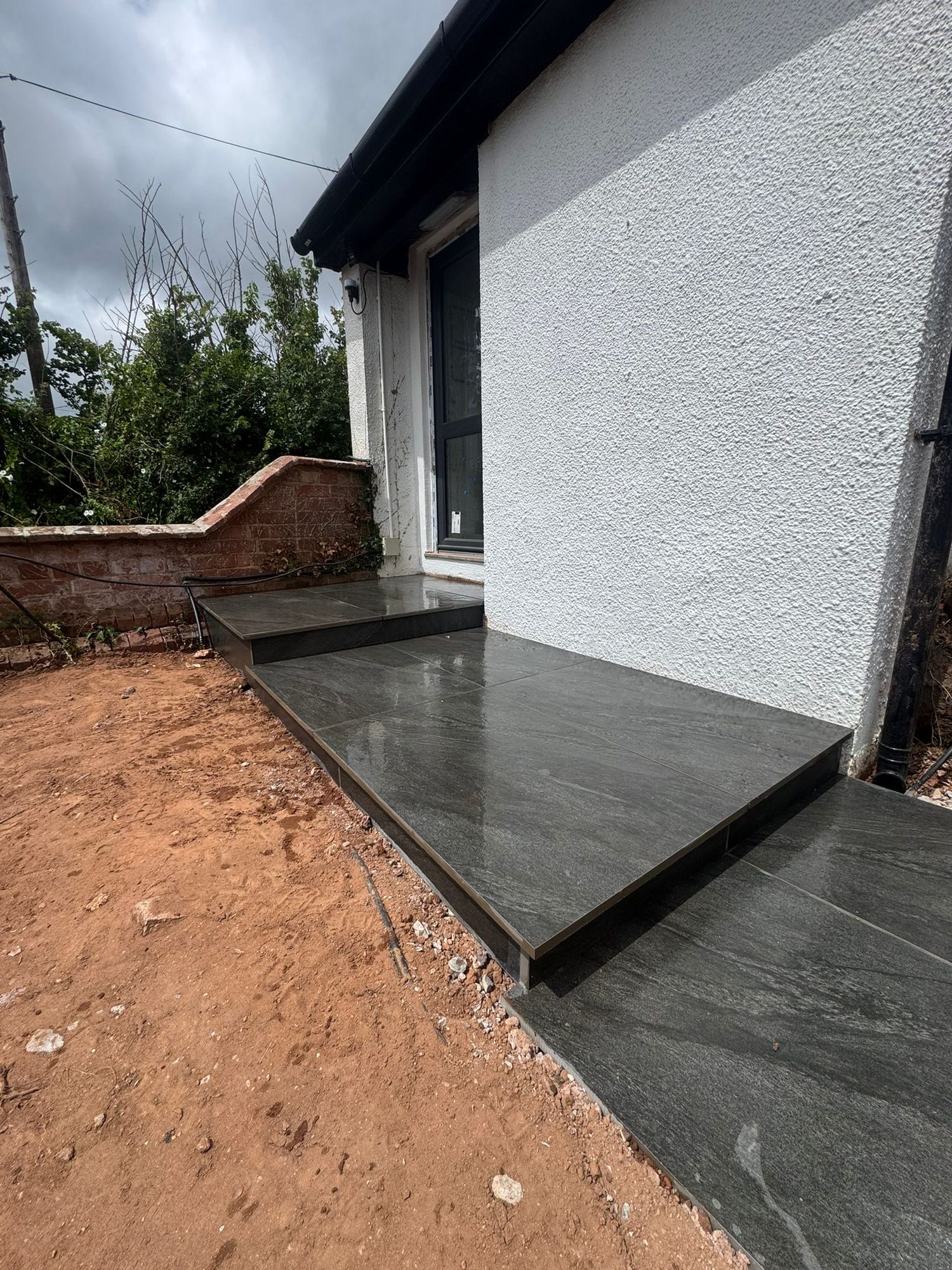
Patios & Paving we have built
Patios & Paving FAQs
Questions homeowners ask before booking
How much does a new patio cost in Wellington?+
As a guide, our patios run from £130 to £180 per m². Where you sit in that range depends on the slab you choose, how much digging out and spoil removal the site needs, access for machinery, and whether steps or walls form part of the job. Your written quote breaks all of that out element by element.
How long does a patio take to build?+
A straightforward domestic patio is usually a few days on site with up to four of us working. Bigger schemes with steps, walls or drainage runs take longer, and the quote states the expected duration so you know what you are committing your garden to.
How quickly can you come out and quote?+
Site visits are free and we aim to get a written quote back to you within a week. Larger projects can take a little longer where we are waiting on supplier pricing for specific materials.
Do I pay anything up front?+
On standard jobs we take a 50% deposit by bank transfer with the balance due on completion. Projects over £25,000 are structured differently and agreed with you in advance. Every job has a written contract signed by both parties before work starts.
Which patio material lasts longest in Somerset weather?+
Porcelain is the most stable and the easiest to keep clean, and it does not need sealing. Good-quality sandstone and limestone last decades too, but benefit from an occasional wash and, in deep shade, a riven rather than sawn surface for grip.
Can you replace a patio without disturbing the rest of the garden?+
Usually yes. We plan access, barrow routes and material storage at the site visit, protect the areas we are crossing, and clean down at the end of every day rather than leaving the whole garden as a working site.
Will a new patio cause damp against the house?+
Not if it is built correctly. The finished surface must sit below the damp proof course and fall away from the building. If your existing paving is too high, we allow for lowering the levels or forming a drainage channel in the quote.
Do you cover Taunton, Tiverton and the surrounding villages?+
Yes. We are based in Wellington and work across Somerset and Mid Devon, including Taunton, Tiverton, Chard, Somerton, Ilminster, Wiveliscombe, Milverton, Cullompton, Sampford Peverell, Bishops Lydeard and Langport.
Do you take on commercial paving contracts?+
Not at present. We work almost entirely for homeowners on private projects, which is where our attention to detail counts for most.
Related Services
Work that often goes with patios & paving
Where We Work
Patios & Paving across Somerset & Mid Devon
- Wellington
- Taunton
- Tiverton
- Chard
- Somerton
- Ilminster
- Wiveliscombe
- Milverton
- Cullompton
- Sampford Peverell
- Bishops Lydeard
- Langport
Based at 14 Lower Westford, Wellington, Somerset. Open 8am – 8pm, Monday to Saturday. Contact us.
Get a patio priced properly, before you commit to anything
Free site visit, itemised written quote usually back within a week, and a written contract before any work begins.
Family-run · 6 years landscaping · Written contract on every job · 50% deposit, balance on completion