
Wellington · Somerset · Mid Devon
Fencing in Wellingtonand across Somerset:set true and built to last
Posts set properly, rails true and boards that stay tight through a Somerset winter, around £100 per m² for 6ft feather edge, quoted free after a site visit and confirmed in writing.
Guide price around £100 per m²
Free site visit · Itemised written quote usually within a week · Written contract on every job
6 years
Landscaping experience, backed by 30+ years in carpentry, joinery and building
4-strong
Family team on site, the people who quoted the job do the work
9
Five-star reviews from homeowners across Somerset and Mid Devon
Free
Site visit and itemised written quote, usually back within a week
In writing
Written contract signed by both parties on every job
Service Overview
What good fencing work looks like
Fencing looks like the simplest job in the garden and is the one most often done badly, because almost all of the workmanship is hidden below ground or behind the boards. A fence is a series of cantilevers: every post is holding a sail of timber against the wind, and the only things resisting that are the depth of the hole, the quality of the concrete around it and the timber's contact with the ground.
We install 6ft feather edge, closeboard and picket fencing for homeowners across Wellington, Taunton, Tiverton and the villages between. Feather edge is the workhorse for boundaries and privacy, closeboard for exposed runs, and picket for front gardens and internal divisions where you want to define a space without closing it in.
Every run is set out before any post goes in. We work along a string line, check the ground level along the length, and decide where gravel boards, stepped panels or a raked run are needed so the fence follows the ground honestly instead of leaving daylight gaps at the bottom.
Posts are set to depth in concrete, rails fixed square, and boards fixed with the correct overlap so the timber can move seasonally without splitting. Gravel boards keep the feather edge itself off the soil, which is the single biggest factor in how long the timber lasts.
Who it is for
Homeowners replacing a storm-damaged or rotten boundary, adding privacy to an overlooked garden, or dividing a garden into usable areas.
When it is needed
When posts rock in the ground, boards are cupping or falling out, panels blow over in winter gales, or a new patio, lawn or veg area needs a defined edge.
Why a professional build matters
Post depth, concrete and ground clearance decide whether a fence stands for fifteen years or leans after two winters. You cannot inspect any of it after the job is done.
Works well alongside
Fencing is frequently part of a wider job for us - a new patio, raised beds, a bin store or gravel area - and pricing them together avoids paying twice for access and set-up.
Request your free quote
Free site visit, itemised written quote, typically back with you inside a week.
Prefer to talk it through? Call 07340 000463 between 8am and 8pm, Monday to Saturday.
What Happens If It Waits
What a failing fence costs you
A leaning fence is a warning, not a look. Once a post has movement, every gust works it further, the joints between rail and post open, and the fixings begin to pull. The failure is rarely gradual after that point: fences that were merely leaning in November are frequently flat in the field in January, taking plants, a shed roof or a car bonnet with them.
Rot works upwards from the ground. Feather edge boards fixed straight down into soil wick moisture, stay damp all winter and soften at the base, which is why so many fences look sound at eye level and crumble at the bottom rail. By the time the damage is obvious, the boards, rails and often the posts all need replacing rather than one component.
There is a privacy and security cost as well. Gaps at the base let dogs out and wildlife in, an unstable boundary is a genuine hazard where children play, and an overlooked garden simply gets used less. Neighbour conversations about a shared boundary also become harder once the fence has actually collapsed.
Common mistakes we are called in to fix
Posts not deep enough
A 6ft fence needs the post depth and concrete volume to match the height and the exposure. Shallow setting is the most common cause of a fence that leans within two winters.
Timber in contact with soil
Boards taken down to the ground rot from the bottom. Gravel boards keep the fence clear of the soil and are far cheaper to replace than a whole run.
Panels forced onto sloping ground
Pre-made panels on a slope leave triangular gaps or need cutting badly. A close-boarded run built in situ can step or rake with the ground properly.
Reusing tired posts
Fixing new boards to old posts saves money once and costs it twice, because the posts fail first and the new timber comes down with them.
Our Process
How we install fencing
- 1
Free site visit and boundary check
We measure the run, look at ground levels and slopes, check access for materials and spoil, and talk through height, style and which side faces where.
- 2
Itemised written quote
Posts, rails, boards, gravel boards, gates, removal and disposal of the old fence are priced separately, so you can see the effect of changing height or style. Usually back within a week.
- 3
Written contract and agreed dates
Scope, price and timings signed by both parties, 50% deposit by bank transfer and the balance on completion.
- 4
Old fence out, posts in
The existing fence and post concrete come out, holes are dug to depth, and posts are set plumb to a string line in concrete before anything else is fixed.
- 5
Rails, boards and clean down
Rails are fixed square, gravel boards set, feather edge or closeboard fixed with correct overlap, gates hung and adjusted, and all old timber and spoil taken away.
The Benefits
What a properly built fence gives you
Stands up to winter
Posts set to depth in concrete and rails fixed square give the run the stiffness it needs when the wind gets behind it.
Longer timber life
Gravel boards and correct ground clearance keep the boards out of standing moisture, which is where rot always starts.
Real privacy
Boards built in situ close the gaps that panels leave on sloping ground, so the boundary is solid from end to end.
Safe for children and pets
No rocking posts, no loose boards, no gaps at the base for a dog to work at.
Clear pricing
Around £100 per m² for 6ft feather edge as a guide, with the exact figure confirmed after the site visit and set out in writing.
Tidy site
Old timber, concrete and spoil are removed rather than stacked behind the shed, and the ground is cleaned down at handover.
In Detail
Styles, timber and situations
Feather edge is built on site rather than dropped in as panels: posts, two or three arris rails depending on height, a gravel board, then vertical feather edge boards overlapped along the run. Because it is built in place, it can step down a slope, rake with a gradient, run to an awkward length or turn a corner without the compromises panels force on you. It is the most common choice for boundaries at 5ft and 6ft.
Closeboard is the heavier relative, suited to exposed runs and boundaries where you want maximum solidity. Picket sits at the other end: lower, spaced boards for front gardens, internal divisions, veg plot enclosures and anywhere you want a defined edge without losing the view. We have installed picket alongside new patios where the fence is as much part of the design as the paving.
Height, style and post spacing all follow the situation. Exposed boundaries take more wind load and want closer post centres. Runs against a hedge or under trees need clearance for maintenance. Gates need a properly braced post on the hanging side, because a gate post carries a constantly moving load that a standard line post is not sized for. Where fencing meets a change in ground level, a sleeper or retaining detail may make more sense than an over-tall fence, and we will say so.
6ft feather edge
The standard boundary fence: built in situ, gravel boarded, and priced at a guide of around £100 per m².
Closeboard fencing
Heavier construction for exposed boundaries and longer runs where wind loading is a genuine factor.
Picket fencing
Lower, spaced boards for front gardens, veg areas and internal divisions, as used on our patio and picket project in Chard.
Gates and access
Side gates and garden gates hung on braced posts, adjusted to swing and latch correctly rather than dropping within a season.
Fencing we have built
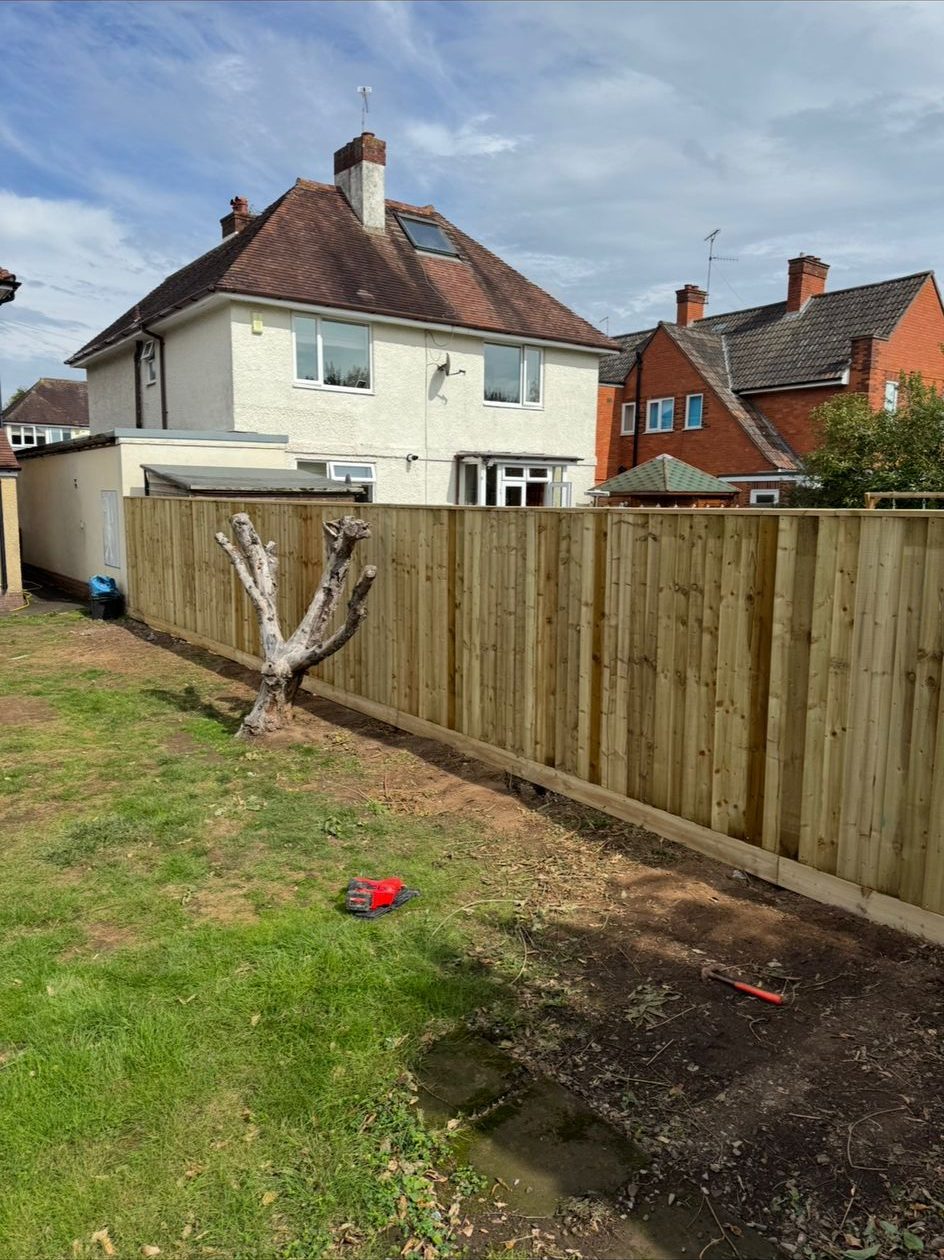
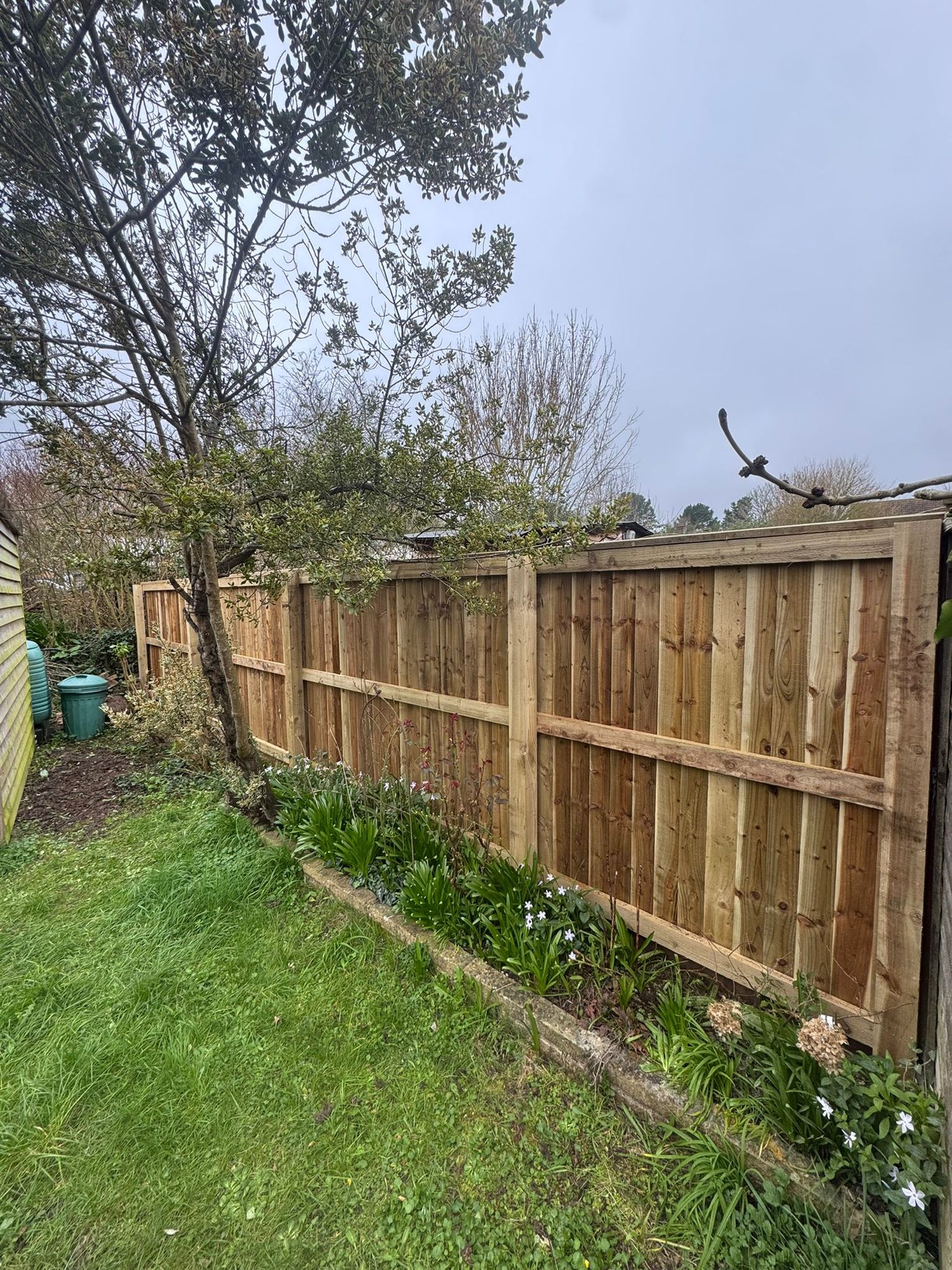
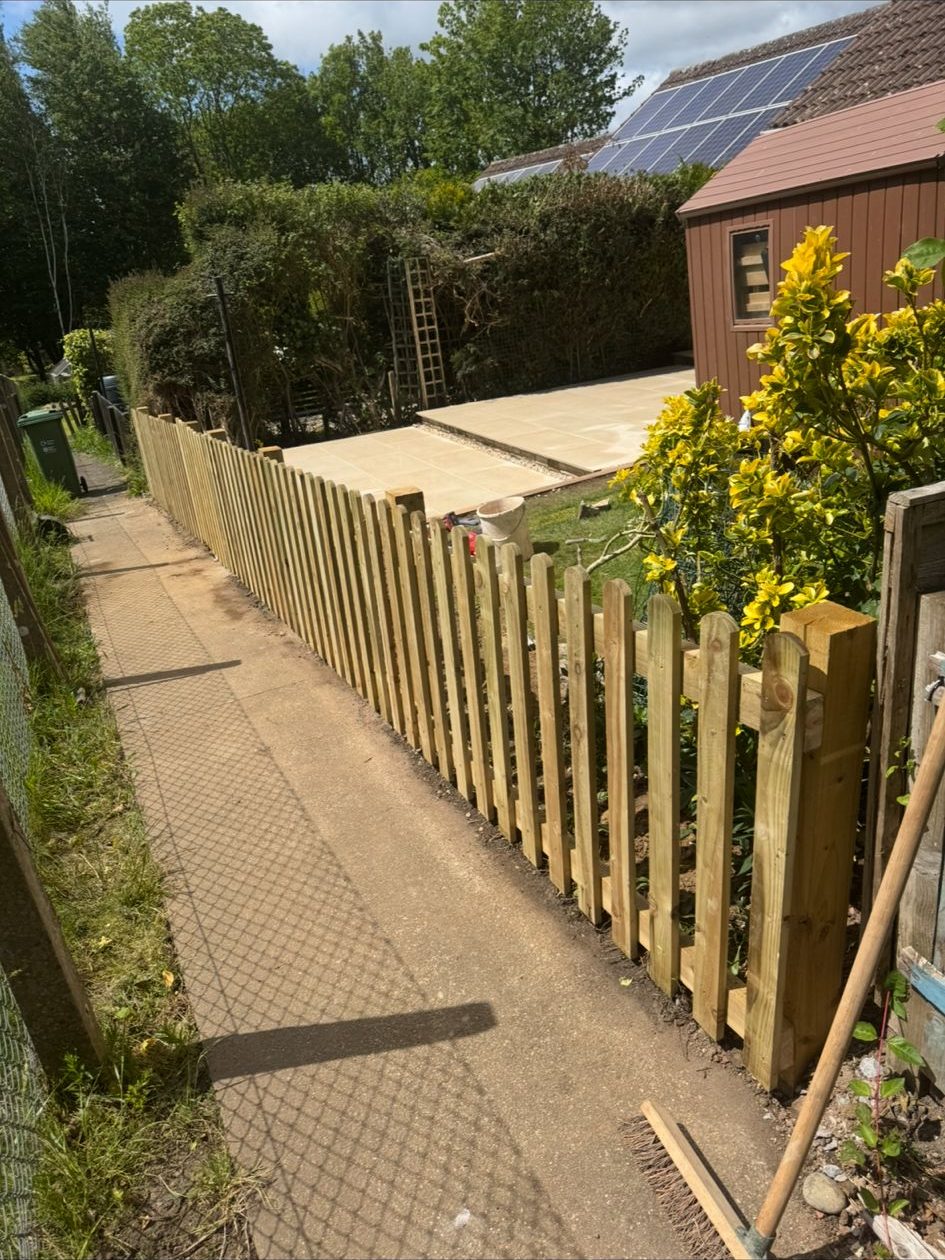
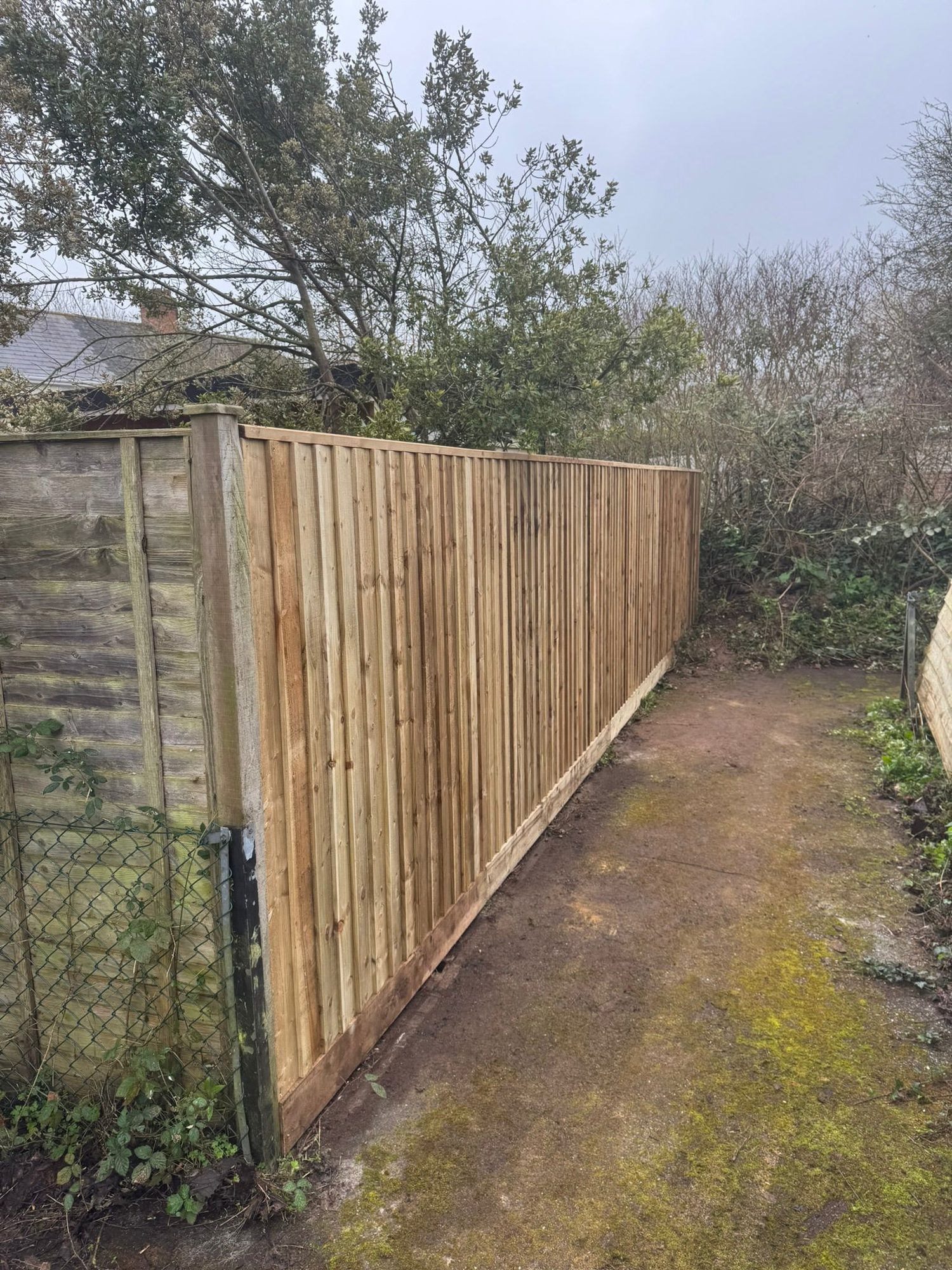
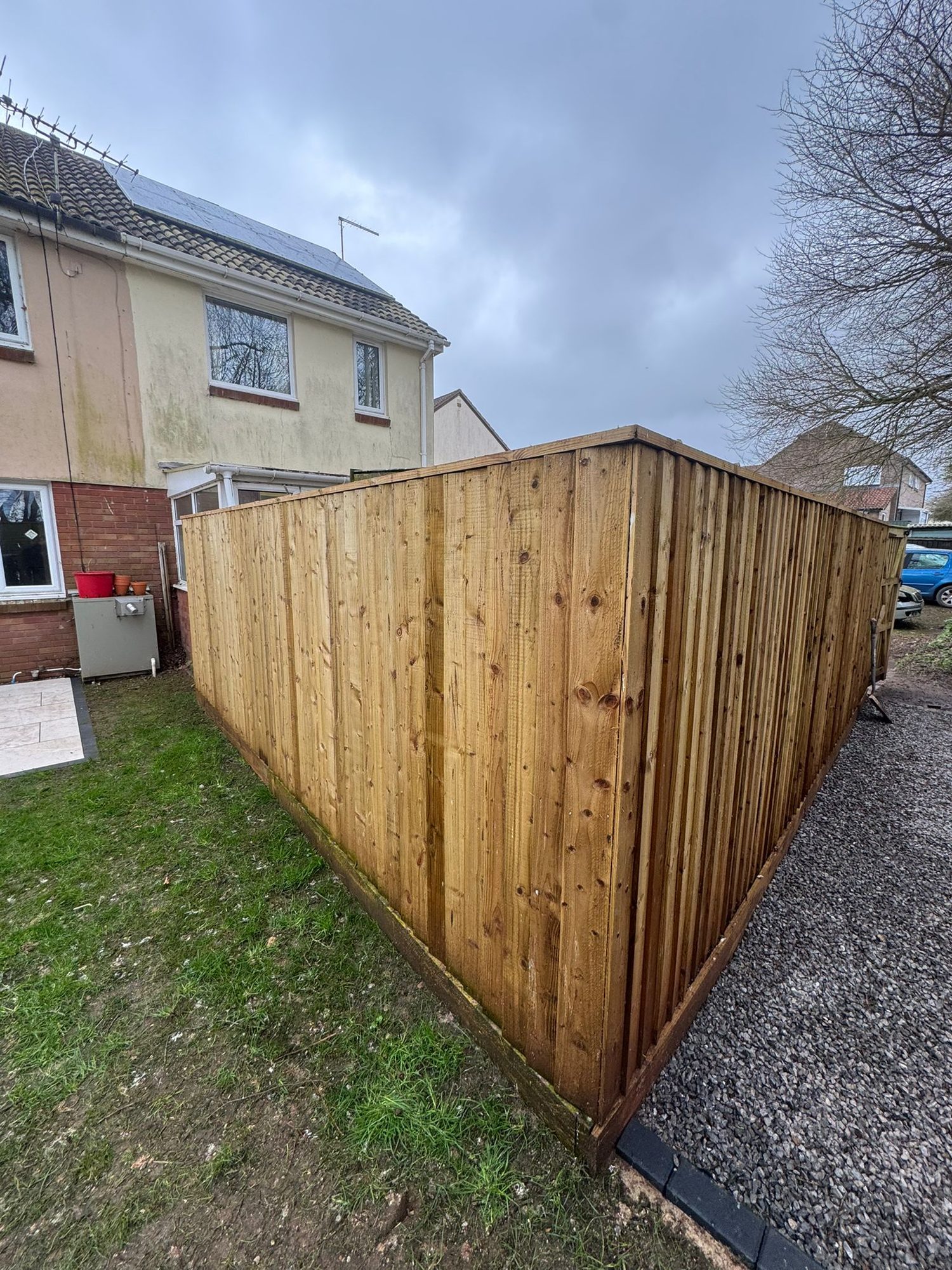
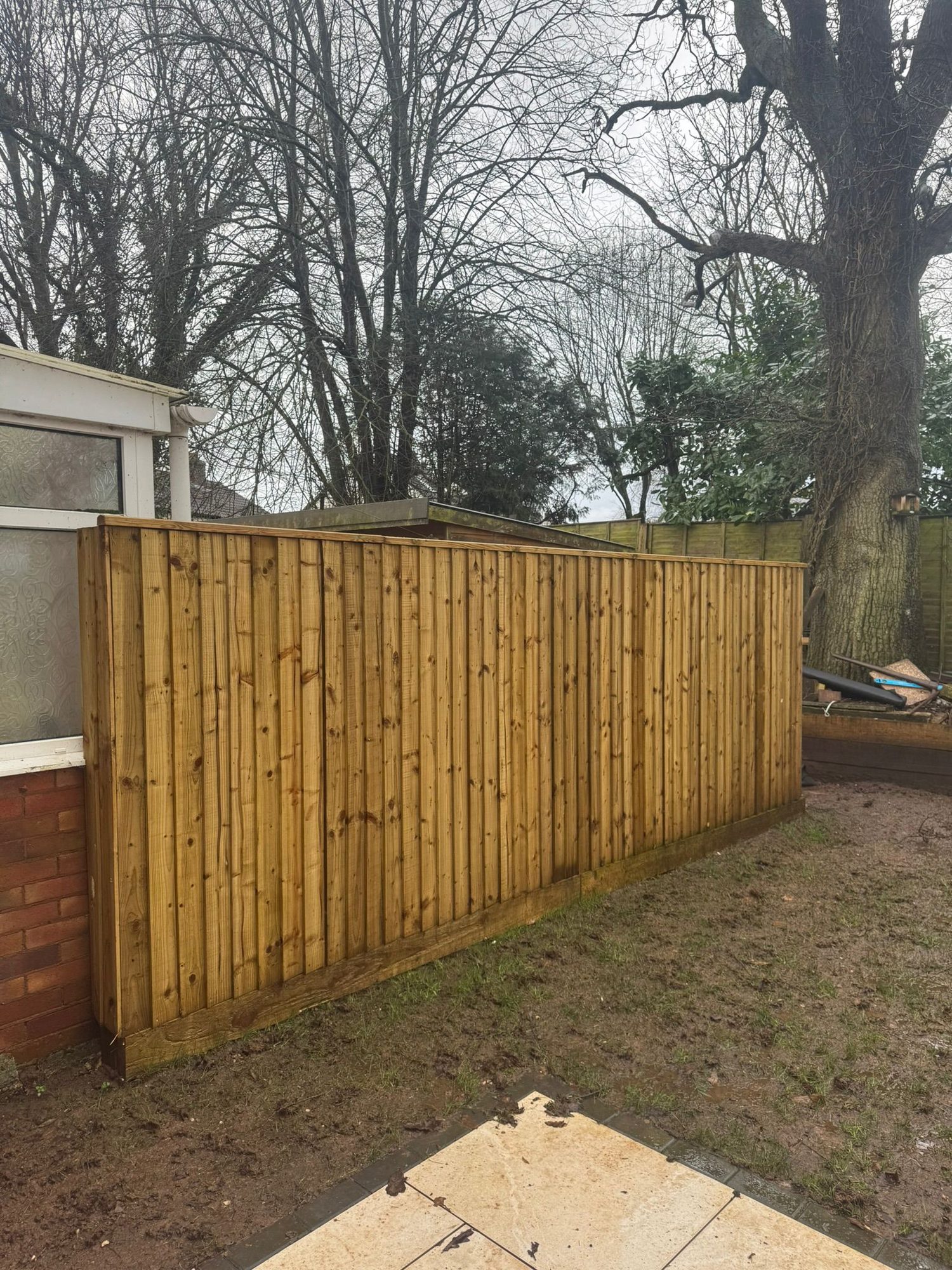
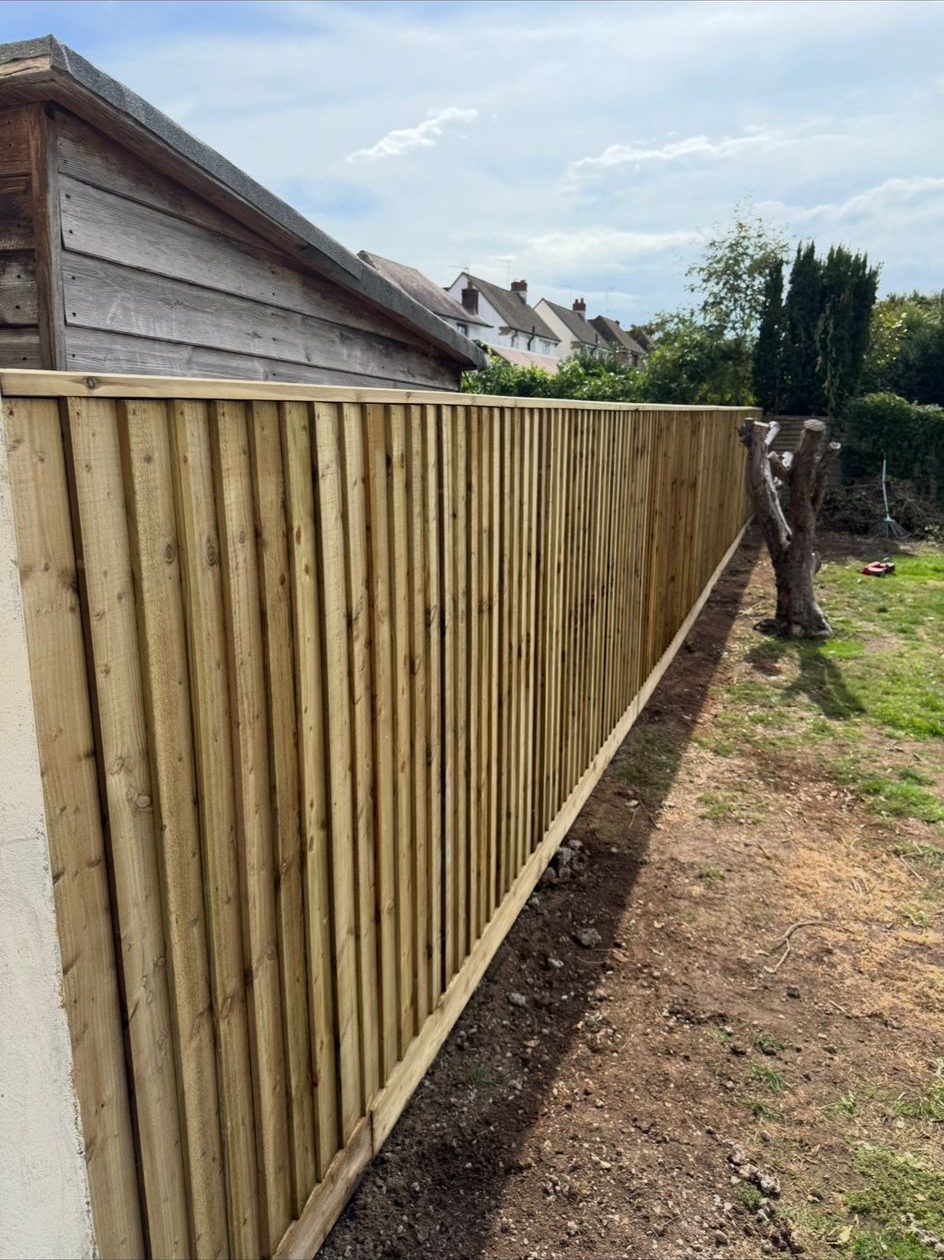
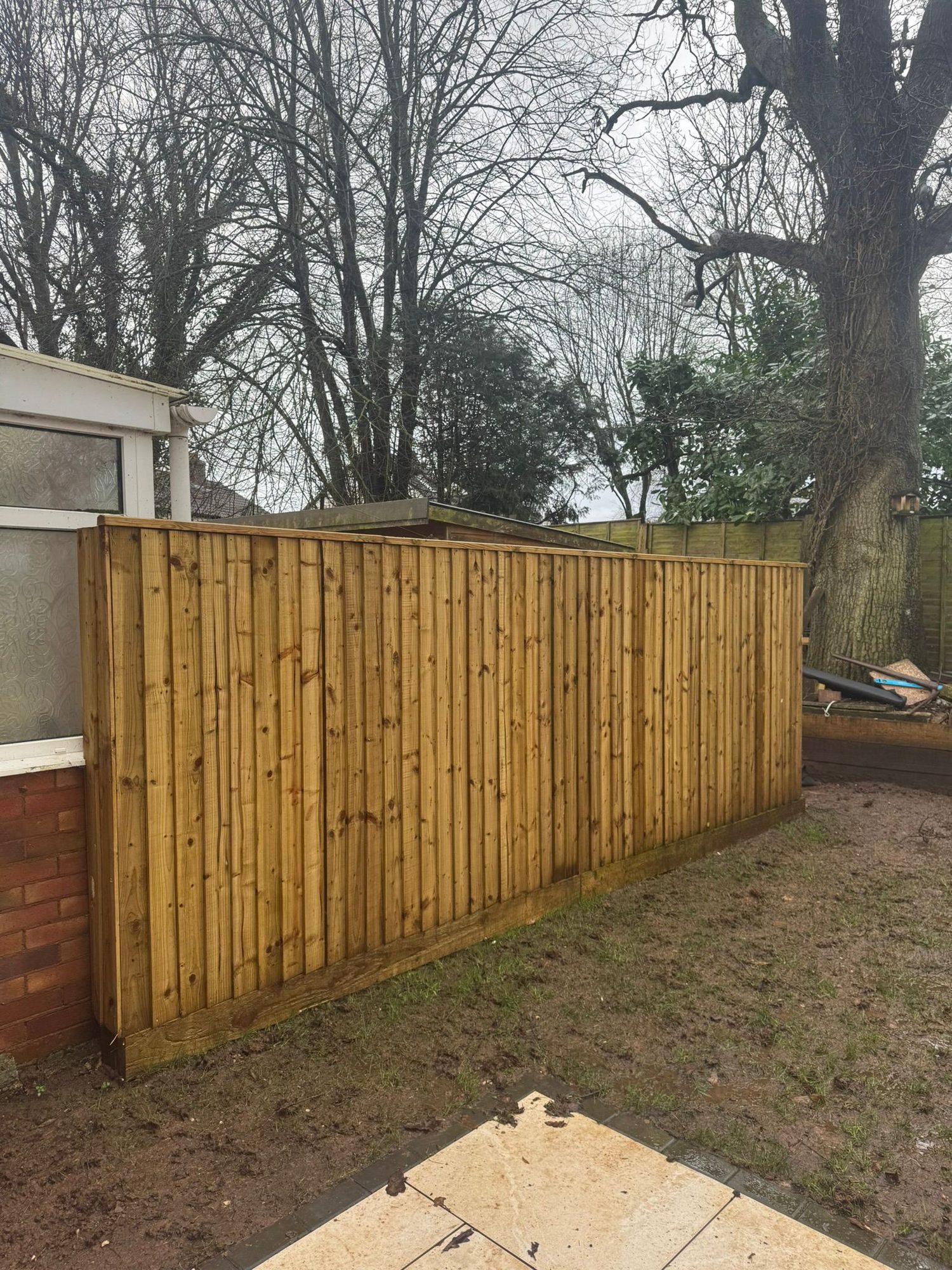
Fencing FAQs
Questions homeowners ask before booking
How much does fencing cost in Wellington?+
As a guide, 6ft feather edge fencing is around £100 per m². The final figure moves with height, style, ground conditions, access, gates and whether an old fence needs removing and disposing of. We confirm the exact price in writing after a free site visit.
How long does a fence installation take?+
Most domestic runs are completed in one to three days depending on length, access and how much old fencing and concrete has to come out. Posts are concreted the same day they are set, and boarding follows.
How long should a new fence last?+
With posts set to depth, gravel boards keeping the timber off the soil and treated materials, a well-built feather edge fence gives many years of service. Ground contact and standing water are what shorten timber life, which is why the base detail matters so much.
Can you fence a sloping garden without gaps at the bottom?+
Yes. Because we build feather edge in situ rather than fitting pre-made panels, the run can step or rake with the ground so it follows the levels instead of leaving triangular gaps.
Do you remove the old fence?+
Yes, and it is priced as a separate line in the quote, including digging out the old post concrete and taking all the material away rather than leaving it in the garden.
Can you fit gates at the same time?+
Yes. Gates are hung on a braced post sized for the load, then adjusted so they swing and latch properly. It is far cheaper to include a gate in the original run than to cut one in later.
Do you do fencing as part of a larger garden project?+
Frequently. Fencing often runs alongside patios, raised beds, bin stores and gravel areas for us, and quoting the work together avoids paying twice for set-up and access.
Which areas do you cover?+
Wellington, Taunton, Tiverton, Chard, Somerton, Ilminster, Wiveliscombe, Milverton, Cullompton, Sampford Peverell, Bishops Lydeard, Langport and the surrounding villages.
Related Services
Work that often goes with fencing
Where We Work
Fencing across Somerset & Mid Devon
- Wellington
- Taunton
- Tiverton
- Chard
- Somerton
- Ilminster
- Wiveliscombe
- Milverton
- Cullompton
- Sampford Peverell
- Bishops Lydeard
- Langport
Based at 14 Lower Westford, Wellington, Somerset. Open 8am – 8pm, Monday to Saturday. Contact us.
Get your fencing measured and priced this week
Free site visit, guide pricing you can sense-check, and an itemised written quote usually back within a week.
Family-run · 6 years landscaping · Written contract on every job · 50% deposit, balance on completion