
Wellington · Somerset · Mid Devon
Driveways in Wellingtonand across Somerset:built from the base up
A driveway that takes the weight of two cars every day without rutting, puddling or spreading into the borders, dug and compacted properly, priced element by element, free site visit first.
Free site visit · Itemised written quote usually within a week · Written contract on every job
6 years
Landscaping experience, backed by 30+ years in carpentry, joinery and building
4-strong
Family team on site, the people who quoted the job do the work
9
Five-star reviews from homeowners across Somerset and Mid Devon
Free
Site visit and itemised written quote, usually back within a week
In writing
Written contract signed by both parties on every job
Service Overview
What a driveway installation involves
A driveway is the only part of a garden that carries a tonne and a half of vehicle several times a day, often turning on the spot. That makes it a groundworks job with a decorative surface on top, rather than a surfacing job. Almost every failed driveway we are asked to replace failed underneath: too shallow a dig, no separation between soil and stone, or a sub-base that was tipped and raked rather than laid and compacted in layers.
We install block paving and gravel driveways for homeowners in Wellington, Taunton, Tiverton and the surrounding area. We do not offer resin surfacing, so if that is what you are set on we will tell you at the site visit rather than talk you into something else.
The build sequence is the same whichever surface goes on top. We excavate to a depth that suits the ground and the loading, remove the spoil, lay a geotextile membrane where the subsoil warrants it, then build and compact the sub-base in layers so the finished surface has something genuinely solid to sit on.
Surface water is planned at the same time. Driveways need somewhere for rainfall to go, whether that is a fall to a permeable margin, a channel drain across the threshold of a garage, or a gravel border that soaks away. Water that has nowhere to go ends up crossing the pavement or sitting against the house.
Who it is for
Homeowners with a rutted, weed-ridden or puddling drive, and anyone converting lawn or a tired concrete apron into off-road parking.
When it is needed
When blocks have sunk in the wheel tracks, gravel has migrated onto the road, weeds are coming through, or parking is tight and the layout needs rethinking.
Why a professional build matters
Loading, edge restraint and drainage decide whether a drive lasts fifteen years or three. None of those can be corrected once the surface is laid.
What we do not do
No resin surfacing, and no commercial car parks. Private residential driveways only, built by the same family team that priced the job.
Request your free quote
Free site visit, itemised written quote, typically back with you inside a week.
Prefer to talk it through? Call 07340 000463 between 8am and 8pm, Monday to Saturday.
What Happens If It Waits
The real cost of leaving a failing driveway
Ruts and dips do not stay small. Once the surface deflects under a wheel, water collects in the low spot, softens the material beneath it, and the next pass of the car pushes it deeper. A shallow depression in spring is regularly a standing puddle and a cracked block by the following winter, and the repair has to go right back to the sub-base to be worth doing.
Loose edges are the second common failure. Without a haunched edge course, blocks at the perimeter creep sideways every time a wheel clips them. The pattern opens, jointing sand washes out, weeds root in the gaps, and the whole field of blocks slowly loses its restraint. At that point relaying is the only honest fix.
There is a practical cost as well as a structural one. A drive that puddles means wet feet and dirty car doors, gravel that migrates ends up in the road and the lawnmower, and an uneven surface makes life difficult for anyone with a pushchair, a wheelchair or unsteady footing. It is also the first thing anyone sees when they arrive at the house.
Common mistakes we are called in to fix
Laying over the old surface
Blocks or gravel spread over cracked concrete or an existing failing drive inherit every weakness underneath, and raise levels against thresholds and airbricks.
Too shallow an excavation
A patio-depth dig under a vehicle load fails quickly. Driveways need a deeper excavation and a thicker compacted sub-base than foot-traffic paving.
No edge restraint
Every open edge needs a kerb or edging course bedded and haunched in concrete. Without it the surface spreads outwards under turning wheels.
Ignoring where the water goes
Adding a large impermeable surface without planning drainage moves the problem to the garage threshold, the front door, or the public highway.
Our Process
How we build a driveway
- 1
Free site visit
We look at the existing surface, the ground conditions, vehicle numbers and turning space, thresholds and airbrick heights, and where surface water can realistically go.
- 2
Itemised written quote
Excavation, spoil removal, membrane, sub-base, edgings, blocks or gravel, drainage and any steps or paths are priced separately, usually back with you within a week.
- 3
Written contract and start date
Scope, price and timings are agreed and signed by both parties. A 50% deposit is taken, with the balance on completion by bank transfer.
- 4
Dig out, base and edgings
We excavate to depth, cart the spoil away, lay membrane where needed, build and compact the sub-base in layers, then set edge courses in concrete before the surface goes down.
- 5
Surface, compaction and clean down
Blocks are laid to the agreed pattern, cut in at the perimeter, vibrated and jointed; gravel is laid over a stabilising layer to the correct depth. The drive is swept and washed before handover.
The Benefits
Why the base-up approach pays
Carries the load
A layered, compacted sub-base spreads vehicle weight instead of concentrating it in two wheel tracks, so the surface stays flat.
Stays put at the edges
Concrete-haunched edge courses hold the field of blocks tight, which is what stops the pattern opening up over time.
Drains deliberately
Falls, permeable margins and channel drains are designed in, keeping water away from the garage, the house and the pavement.
Adds usable parking
Layouts are planned around how you actually park and turn, not just the shape of the existing hardstanding.
Low upkeep
Correct jointing and a membrane under gravel dramatically reduce weeds and migration, so maintenance is a sweep rather than a project.
Priced transparently
You see the cost of the groundwork separately from the surface, which makes the choice between block and gravel a straightforward one.
In Detail
Block paving, gravel and the details that matter
Block paving suits drives that need a hard, sweepable surface, defined parking bays or a pattern that ties into an existing path or patio. Blocks are laid on a screeded bed over the compacted sub-base, cut in at the perimeter with a diamond blade rather than a splitter where accuracy matters, vibrated in, then jointed with kiln-dried sand brushed and re-brushed until the joints are genuinely full. Laying courses and any pattern changes are set out before we start so cuts fall sensibly.
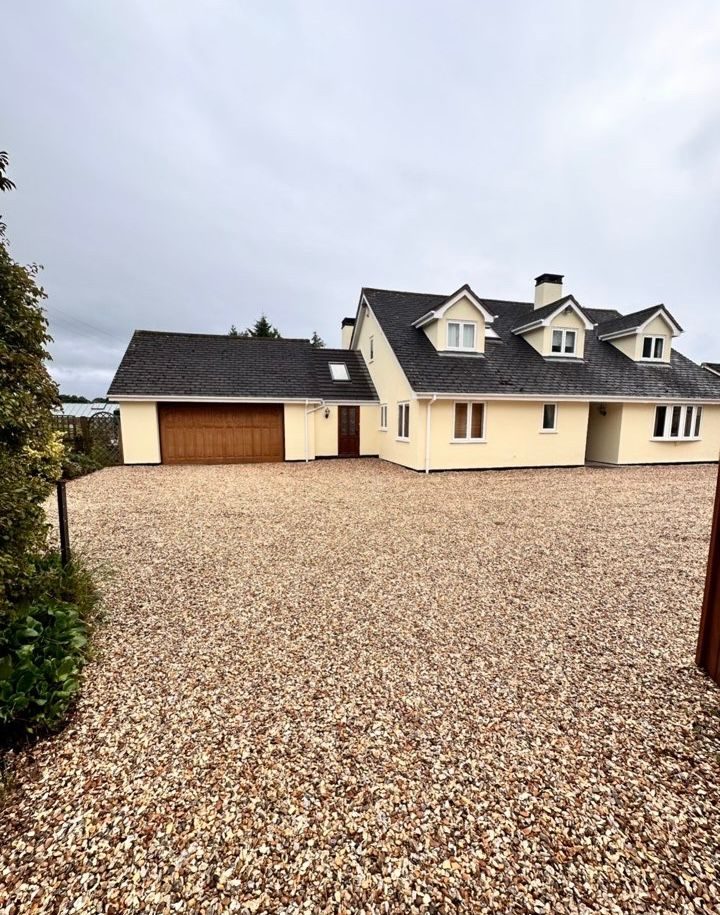
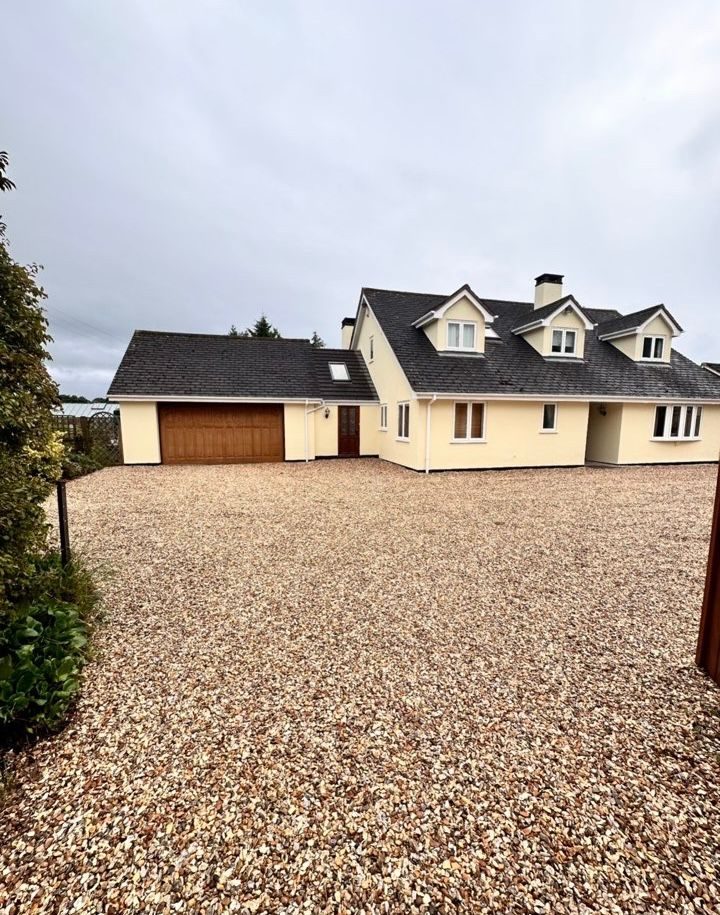
Gravel drives are quicker, cheaper and very well suited to rural properties around Wellington, Wiveliscombe and Milverton, but only when they are built as a structure. That means excavation, membrane, a compacted sub-base, edge restraint to hold the stone, and a chosen gravel size that beds together rather than rolling. Loose stone tipped onto soil is not a driveway and will be in the hedge by the end of the year.
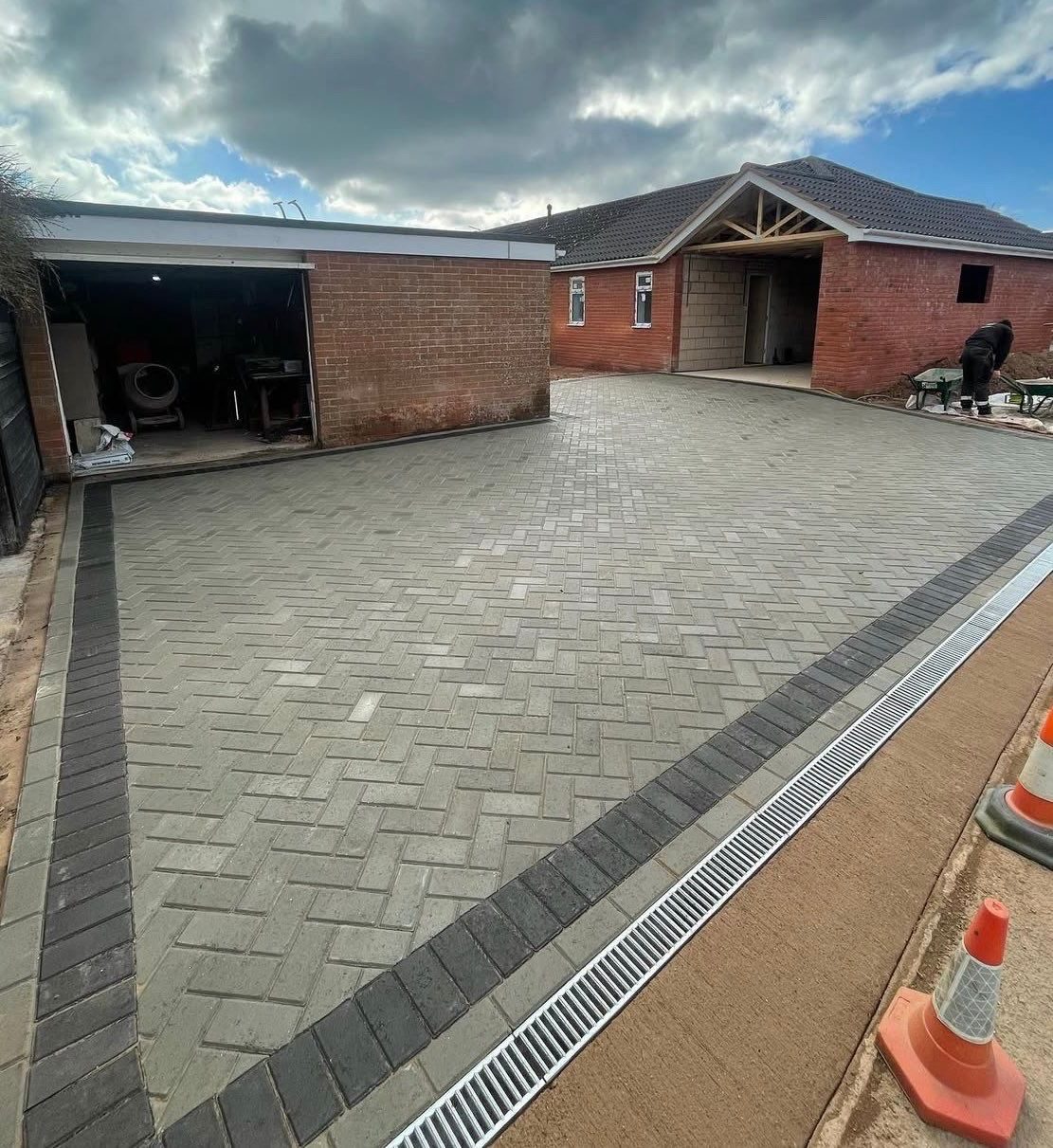
Around the surface itself sits the work that makes a drive usable: dropped thresholds at a garage, a channel drain where the drive falls towards a door, retaining or low boundary walls where the ground level changes, a path from the parking area to the front door, and planted or gravel margins that soften the edges. All of it is groundwork we do ourselves as part of the same project.
Block paved driveways
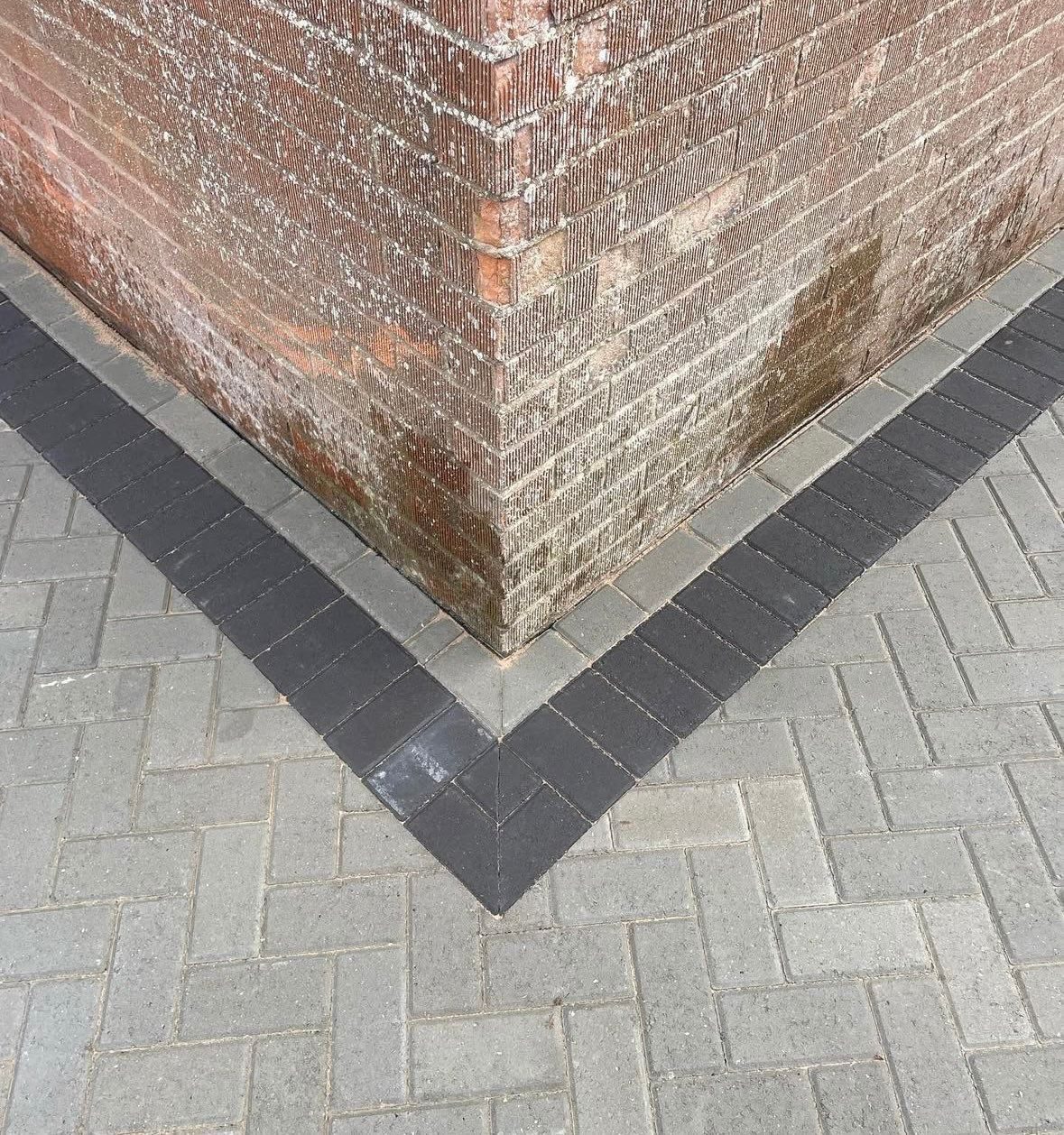
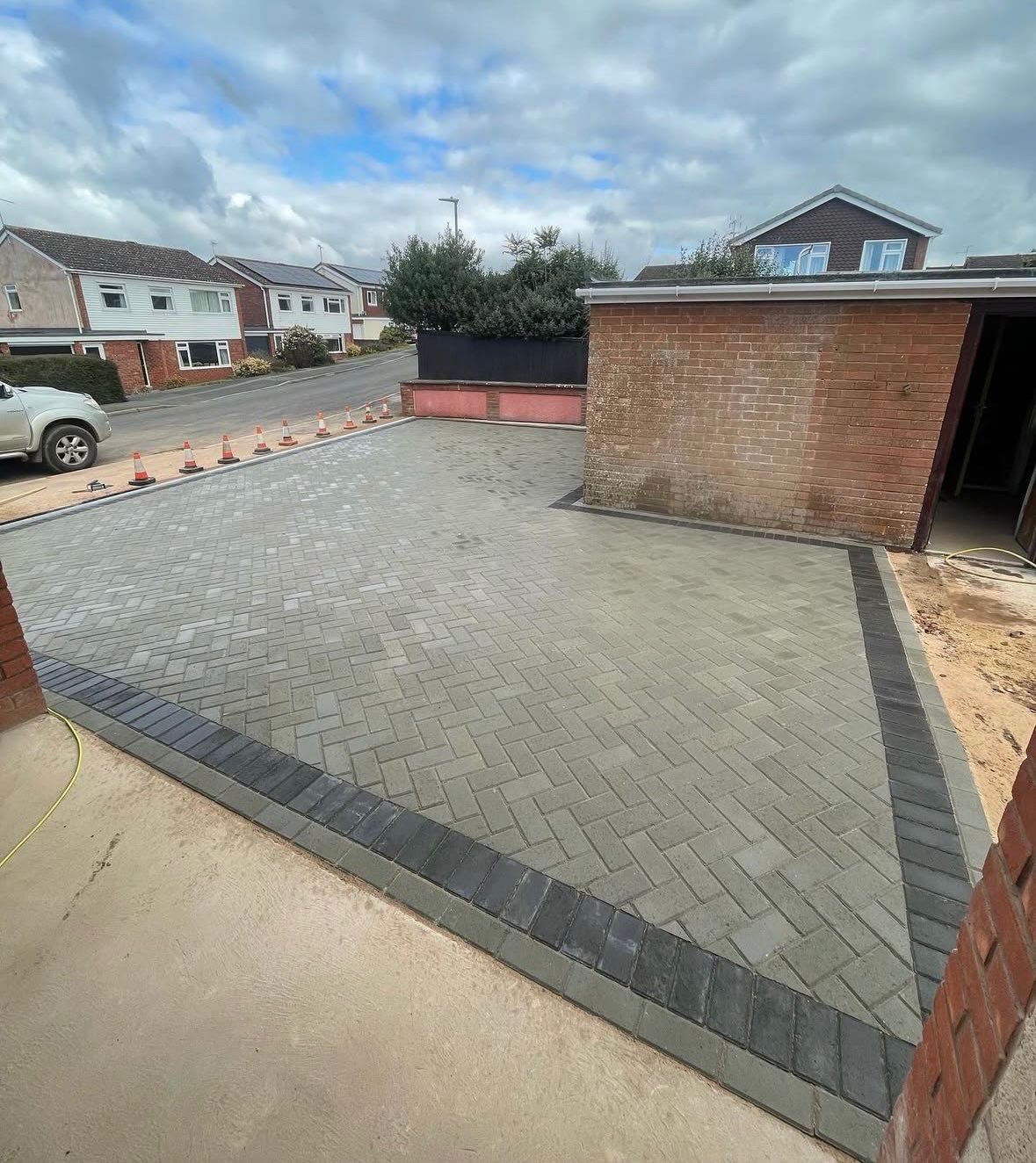
Concrete or clay blocks in stretcher, herringbone or basketweave, with contrasting edge courses and defined bays.
Gravel driveways
Membrane, compacted base, restrained edges and a gravel grade chosen to stay where it is put, well suited to rural and period properties.
Drainage detailing
Channel drains, permeable margins and considered falls so rainfall leaves the drive without crossing the pavement or reaching the house.
Parking extensions
Turning lawn or an over-sized border into additional off-road parking, with retaining or edging work where levels change.
Driveways we have built
Driveways FAQs
Questions homeowners ask before booking
How much does a new driveway cost?+
Driveways are quoted per project rather than by a single rate, because the excavation depth, spoil removal, drainage and edging vary enormously between sites. Every quote is itemised so you can see the groundwork cost separately from the surface, and the site visit and quote are free.
Do you install resin driveways?+
No. We install block paving and gravel driveways only. If resin is what you want, we will say so at the site visit rather than steer you towards something else.
How long will the driveway be out of use?+
Most domestic drives are a matter of days on site, depending on size, the depth of the dig and how much spoil has to be carted away. The written quote states the expected duration so you can plan parking.
Do I need planning permission?+
Rules vary by property and by how surface water is handled, and permeable finishes or a soakaway margin generally keep things simple. We will flag anything worth checking with the local authority at the site visit, but the final check is yours to make.
Will weeds come through a new drive?+
Far less. A membrane under gravel and properly filled kiln-dried joints in block paving remove most of the rooting opportunities. Windblown seed can still settle on the surface, so an occasional sweep or spot treatment keeps it clean.
Can you widen an existing driveway rather than replace it?+
Often yes, and we will tell you honestly at the visit whether tying new work into the existing surface will look and perform well, or whether the existing base is close enough to failure that extending it is money wasted.
How long does a gravel drive last before it needs topping up?+
With edge restraint and the right stone grade, a gravel drive typically needs no more than a light top-up every few years. Drives without restraint lose stone constantly, which is the main reason we build the edges properly first.
Which areas do you cover for driveway work?+
Wellington and the wider Somerset and Mid Devon patch, including Taunton, Tiverton, Chard, Somerton, Ilminster, Wiveliscombe, Milverton, Cullompton, Sampford Peverell, Bishops Lydeard and Langport.
Related Services
Work that often goes with driveways
Where We Work
Driveways across Somerset & Mid Devon
- Wellington
- Taunton
- Tiverton
- Chard
- Somerton
- Ilminster
- Wiveliscombe
- Milverton
- Cullompton
- Sampford Peverell
- Bishops Lydeard
- Langport
Based at 14 Lower Westford, Wellington, Somerset. Open 8am – 8pm, Monday to Saturday. Contact us.
Find out what your driveway should actually cost
Free site visit, itemised written quote usually within a week, written contract signed before we start.
Family-run · 6 years landscaping · Written contract on every job · 50% deposit, balance on completion