
Wellington · Somerset · Mid Devon
Garden Landscapingin Wellington, Somerset:one scheme, one team
Levels, hard surfaces, structures and planting planned together so the finished garden works as a whole, built by a four-strong family team who are on site from the first dig to the final sweep.
Free site visit · Itemised written quote usually within a week · Written contract on every job
6 years
Landscaping experience, backed by 30+ years in carpentry, joinery and building
4-strong
Family team on site, the people who quoted the job do the work
9
Five-star reviews from homeowners across Somerset and Mid Devon
Free
Site visit and itemised written quote, usually back within a week
In writing
Written contract signed by both parties on every job
Service Overview
What a full landscaping project covers
Landscaping is the job where everything else we do comes together. A garden transformation typically involves reworking levels, building the hard surfaces, adding structures such as steps, walls, sleeper beds or fencing, then planting into ground that has actually been prepared for it. Done as one scheme, those elements line up. Done piecemeal over several years by different trades, they rarely do.
Most of the gardens we take on have a specific frustration behind them: a slope nobody can use, a lawn that is under water from October, a patio in the wrong place for the sun, or a plot that has simply been neglected and needs a plan rather than another weekend of tidying.
We start from what you want the garden to do - where you sit, where the children play, whether you want to grow vegetables, how you get the bins out - and work backwards to the levels and surfaces that make it possible. Because the same team handles groundworks, paving, timber and stonework detail, transitions between elements are designed rather than improvised.
A strong love of the countryside runs through how we design and build, so schemes tend to sit comfortably in a Somerset setting rather than fighting it. That usually means honest materials, generous planting beds and hard surfaces sized to what is actually used.
Who it is for
Homeowners with a garden that does not work: awkward levels, drainage problems, a layout inherited from someone else, or a new-build plot that is bare ground.
When it is needed
After an extension changes the back of the house, when a slope makes half the garden unusable, or when several separate problems make one coordinated project cheaper than four small ones.
Why a professional build matters
Levels, drainage and retaining are structural decisions. Getting them right at the start is what allows the paving, lawn and planting above them to last.
How it is priced
Landscaping projects are quoted per project, broken into separate elements so you can see what the paving costs against the groundwork, the timber or the turf, and adjust scope before anything is ordered.
Request your free quote
Free site visit, itemised written quote, typically back with you inside a week.
Prefer to talk it through? Call 07340 000463 between 8am and 8pm, Monday to Saturday.
What Happens If It Waits
What happens when a garden is tackled piecemeal
The most expensive gardens we see are the ones built in fragments. A patio goes in one year, a fence the next, a lawn after that, and none of them account for the others. Levels do not meet, water from the new paving runs into the new lawn, and the fence line cuts across the only sensible route from the back door to the shed. Fixing that means taking finished work back out.
Drainage is the issue that punishes delay most. A garden that sits wet does not just kill the lawn: it softens the ground under paving, keeps timber damp so it rots early, drowns planting and makes the whole space unusable for half the year. Every season it is left, the remedial work grows, because more finished elements have been built on top of the problem.
Neglect compounds in a similar way. Self-seeded trees push up paving and destabilise walls, brambles root through boundaries, and topsoil is lost to weed growth. The clearance and repair required after five years of drift is often a bigger line in the quote than the new work itself.
Common mistakes we are called in to fix
Designing surfaces before levels
Deciding where the patio goes before working out how the ground falls means either an unusable step or a retaining problem discovered halfway through the build.
Ignoring how water moves
Adding hard surfaces without planning where rainfall goes shifts the problem to the lowest point in the garden, which is often the lawn or the house.
Skipping ground preparation before planting
Turf and plants laid straight onto compacted builder's subsoil fail slowly and expensively. Preparation is the cheapest part of the planting budget.
Using several unconnected trades
When groundworks, paving, timber and planting are separate contracts; nobody owns the junctions between them, and the junctions are where gardens fail.
Our Process
How a garden transformation runs
- 1
Free site visit and brief
We walk the garden with you, take levels and measurements, look at drainage, access and existing planting, and get clear on how you want to use the space.
- 2
Scheme and itemised quote
We set out the elements - clearance, groundworks, retaining, paving, timber, turf, planting - and price each one, so you can see the whole picture and adjust before committing. Usually back within a week.
- 3
Written contract and programme
Scope, price and timings agreed and signed. A 50% deposit is taken on standard jobs, with larger projects over £25,000 structured and agreed in advance.
- 4
Clearance, levels and structure
Clearance and excavation first, then drainage, retaining and sub-bases. The unglamorous half of the project is the half that determines how the garden performs.
- 5
Surfaces, planting and handover
Paving, timber, turf and planting go in, the garden is cleaned down, and we walk it with you at handover. Sites are swept clean at the end of every working day, not just at the end.
The Benefits
Why one coordinated scheme is worth it
Everything lines up
Steps meet paving, paving meets lawn, and the fence line follows the layout, because all of it was planned and built by the same team.
Water goes where it should
Falls, soakaways and permeable margins are designed into the scheme instead of being retrofitted after the first wet winter.
One point of responsibility
No coordinating between trades, no arguments about whose element caused the problem. James priced it and James is on site.
Speed on site
Up to four skilled pairs of hands means the garden is a building site for a shorter period, and jobs finish when we said they would.
Cost visibility
Element-by-element pricing lets you spend where it matters to you and trim where it does not, before any material is ordered.
A garden you actually use
Layouts are built around seating, access, play, growing and bin routes, the ordinary things that decide whether a garden gets used.
In Detail
Elements within a landscaping project
Ground shaping and retaining come first on almost every sloping plot around Wellington and the Blackdown foothills. Cutting a level terrace out of a slope creates a face that has to be held, which means a retaining wall or sleeper structure with the drainage and foundations the height actually requires. Getting the terrace width and step positions right at this stage is what makes the finished garden feel generous rather than cramped.
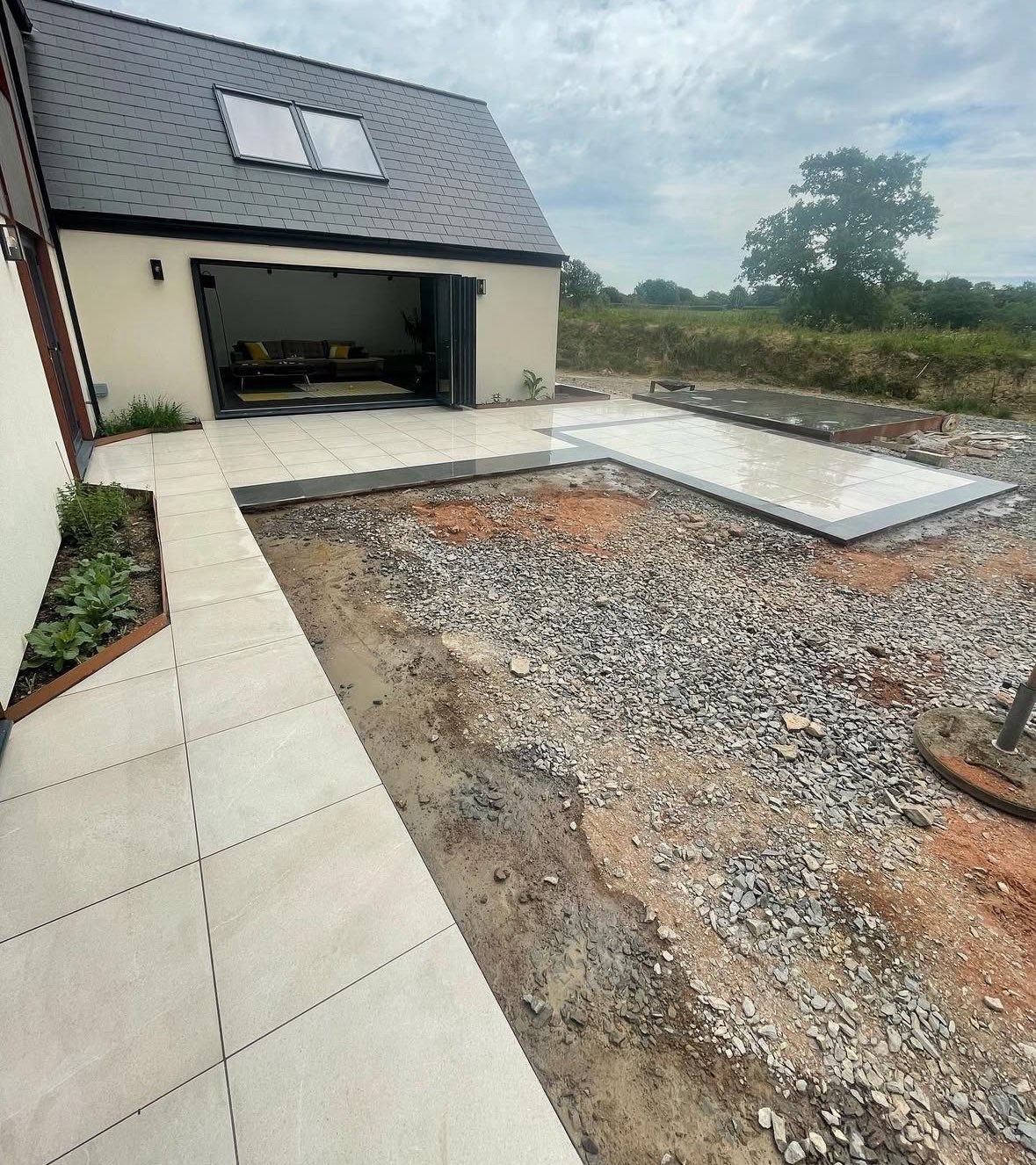
Hard surfaces follow: patios and paths in porcelain, natural stone or block, sized to the furniture and traffic they will carry, with falls set away from the house. Steps between levels, gravel margins, bin and bike stores, and access ramps all get designed in at this point, because they depend on the same levels as the paving.
Timber and stone details give a garden its character: sleeper beds, raised planters, decking, pergolas, feather edge or picket fencing, and smaller feature stonework such as dry stone details. With more than thirty years of carpentry, joinery and building experience in the team alongside six years of landscaping, that detailing is done properly rather than subcontracted out.
Planting and lawns finish the scheme. Beds and borders are prepared with the right depth and quality of soil, turf is laid on ground that has been dug over and levelled rather than raked over rubble, and planting is chosen to suit the aspect and the setting. Our review from a cottage garden renovation in the hottest week of the summer came down to exactly this: preparation, then a full team on site keeping to the agreed timescale.
Full garden transformation
Clearance through to planting as a single coordinated project, with everything priced element by element.
Sloping and terraced gardens
Cut and fill, retaining walls or sleeper structures, steps and level terraces that turn an unusable slope into rooms.
New-build and post-extension gardens
Bringing a bare or builder-damaged plot up to a finished garden, including removing compaction and importing decent topsoil.
Productive and family gardens
Raised veg beds, bin and storage areas, lawn for play and defined seating space, as built for our clients in Wellington and Chard.
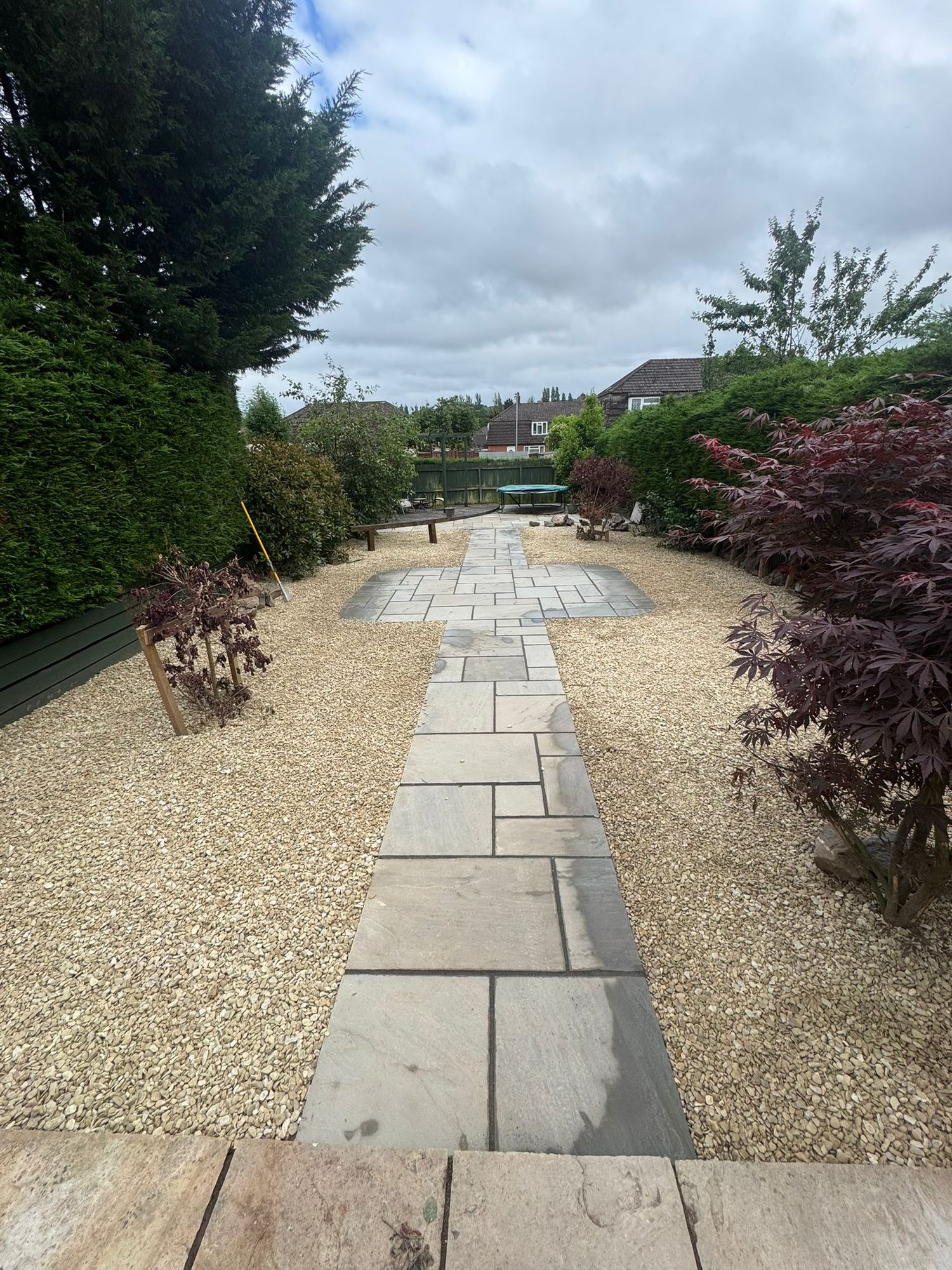
Landscaping we have built
Landscaping FAQs
Questions homeowners ask before booking
How much does a full garden landscaping project cost?+
There is no single rate, because the mix of elements differs on every plot. Landscaping is quoted per project with each element priced separately - clearance, groundworks, paving at a guide of £130–£180 per m², fencing at around £100 per m², timber, turf and planting - so the total is built from parts you can see and adjust.
How long does a garden transformation take?+
Typically one to several weeks on site depending on the size of the plot, the amount of excavation and how many elements are involved. The written quote sets out the expected programme before you commit.
Do you provide a design?+
We work with you at the site visit to plan levels, layout and materials, then set the scheme out in the itemised quote so you can see exactly what is being built and where. If you already have a designer's drawings; we are happy to build to them.
Can the work be done in phases?+
Yes, and for some budgets that is the sensible route. The key is planning the whole scheme first so that phase one does not have to be dug up to build phase two.
What if my garden floods or sits wet all winter?+
Then drainage is the first element in the quote rather than an afterthought. We look at where water arrives, where it can go, and what combination of falls, land drainage, soakaways and permeable surfaces solves it before any paving or turf goes down.
How disruptive is the work?+
There will be machinery, materials and spoil for part of the project. We plan access routes at the site visit, protect what we cross, and clean the site down at the end of every day: several of our reviews specifically mention being left spotless.
Do you take on commercial landscaping?+
Not at present. We work almost entirely for homeowners on private projects.
How soon can you start?+
Site visits and quotes are free and usually turned around within a week. Start dates depend on the current programme, and we will give you an honest date at the visit rather than a hopeful one.
Related Services
Work that often goes with landscaping
Where We Work
Landscaping across Somerset & Mid Devon
- Wellington
- Taunton
- Tiverton
- Chard
- Somerton
- Ilminster
- Wiveliscombe
- Milverton
- Cullompton
- Sampford Peverell
- Bishops Lydeard
- Langport
Based at 14 Lower Westford, Wellington, Somerset. Open 8am – 8pm, Monday to Saturday. Contact us.
Turn the garden you avoid into the one you use
Free site visit, an itemised written quote covering every element, and a written contract before work begins.
Family-run · 6 years landscaping · Written contract on every job · 50% deposit, balance on completion